










Culture Amp looks different in 2026 than it did even a year ago. It's cutting jobs while putting a stronger focus on AI. In March, it launched a new tool called the "Performance Culture Quadrant." Even with all this change, it still holds a strong 4.5-star rating from 1,543 reviews on G2. That's a lot happening at once, which is exactly why an older review won't tell you what you need to know today. It makes sense that many companies are still deciding if they can trust Culture Amp with their HR budget right now.
This review will help you cut through the noise. We'll look at what Culture Amp does well right now, where real users say it falls short, and what it actually costs once you get past the "contact us" button. You'll get a clear, up-to-date answer here — not just a list of features.
Quick disclosure: we build ThriveSparrow, a platform that competes with Culture Amp. We won't pretend to be neutral. All the data and quotes below come from Culture Amp's own materials and public review sites — not from our sales team
Culture Amp at a Glance
- Best for: Mid-to-large companies, particularly teams with dedicated HR or People Ops resources
- Pricing: Not listed on Culture Amp's own pricing page — you need to request a quote. Third-party purchase data (not published by Culture Amp) puts the median deal at about $22,180 a year, ranging from $7,700 to $57,793
- Core modules: Engage (surveys), Perform (performance management), Develop (career growth + Skills Coach)
- Key integrations: ADP, Slack, Microsoft Teams, HRIS platforms, SSO
- Security: SOC 2 Type I certified
- G2 rating: 4.5/5 from 1,543 reviews
- Typical rollout: Some buyer reports describe a full launch in around 2 months
Quick take: if the sales-gated pricing or multi-week rollout above already sounds like a dealbreaker, see how ThriveSparrow compares.
Culture Amp Platform Overview and Evolution
Culture Amp started out as a simple survey tool. Over time, it grew into a full employee experience platform. Today, it covers many parts of managing a workforce. It's built to help companies build a stronger culture — not just measure it.
Key Platform Capabilities
At its core, Culture Amp is centered around three main areas: employee engagement measurement, performance management, and employee development. The engagement side lets teams collect and study feedback through custom surveys. The performance side supports ongoing conversations, with tools like real-time feedback and goal tracking. And the development side offers growth plans built for each person.
The platform's biggest strength is how well it connects with other tools:
- Connects directly with ADP to keep HR data in sync
- Works with Slack to make team communication easier
- Works with Microsoft Teams for better collaboration
- Connects with HRIS systems to keep data organized in one place
Recent Updates and Improvements
Culture Amp has added several strong upgrades recently. It now offers more advanced survey tools with better analytics. The platform has also offered Skills Coach for several years — a feature that sends short daily learning lessons through Slack, email, and Microsoft Teams. More recently, in 2025, Culture Amp launched AI Coach, an AI-powered coaching tool that gives managers personalized, on-demand guidance drawn from the platform's own workplace data.
What Culture Amp Actually Costs
Culture Amp doesn't share a set price per employee. Every quote comes from their sales team. The final price depends on three things: how many employees you have, which modules you pick (Engage, Perform, Develop), and how long your contract is. Here's what real buyer data shows, instead of a list price:
What buyers should know before signing: the big range above shows that Culture Amp prices deals in very different ways. Don't assume any of these numbers apply to you — get a quote for your exact team size and modules. And don't be afraid to negotiate. Outside purchase data shows buyers often get 9–13% off the first quote.
Is Culture Amp Right for Your Team?
Culture Amp is a strong fit if:
- You're a larger organization with a dedicated People Ops or HR analytics team
- You want engagement, performance, and development all on one connected platform
- You already use ADP, Slack, or Microsoft Teams and want them tightly connected
- You have the time and staff to manage a multi-week rollout and ongoing survey setup
Culture Amp is probably not the right fit if:
- You're a smaller team that doesn't need all three modules
- You want clear, upfront pricing instead of a sales call
- You want something lighter and faster to set up, without a long account-manager process
- Your team has been let down before by tools that are powerful but slow to set up
If that second list sounds like you, here's the practical trade-off: Culture Amp hides its pricing behind a sales call, so it's hard to know your cost upfront. And the multi-week rollout is a real cost for a team that's already stretched thin.
This is where an option like ThriveSparrow may be worth comparing. It covers the same core needs — surveys, performance reviews, and feedback — while offering published pricing and a lighter setup process.
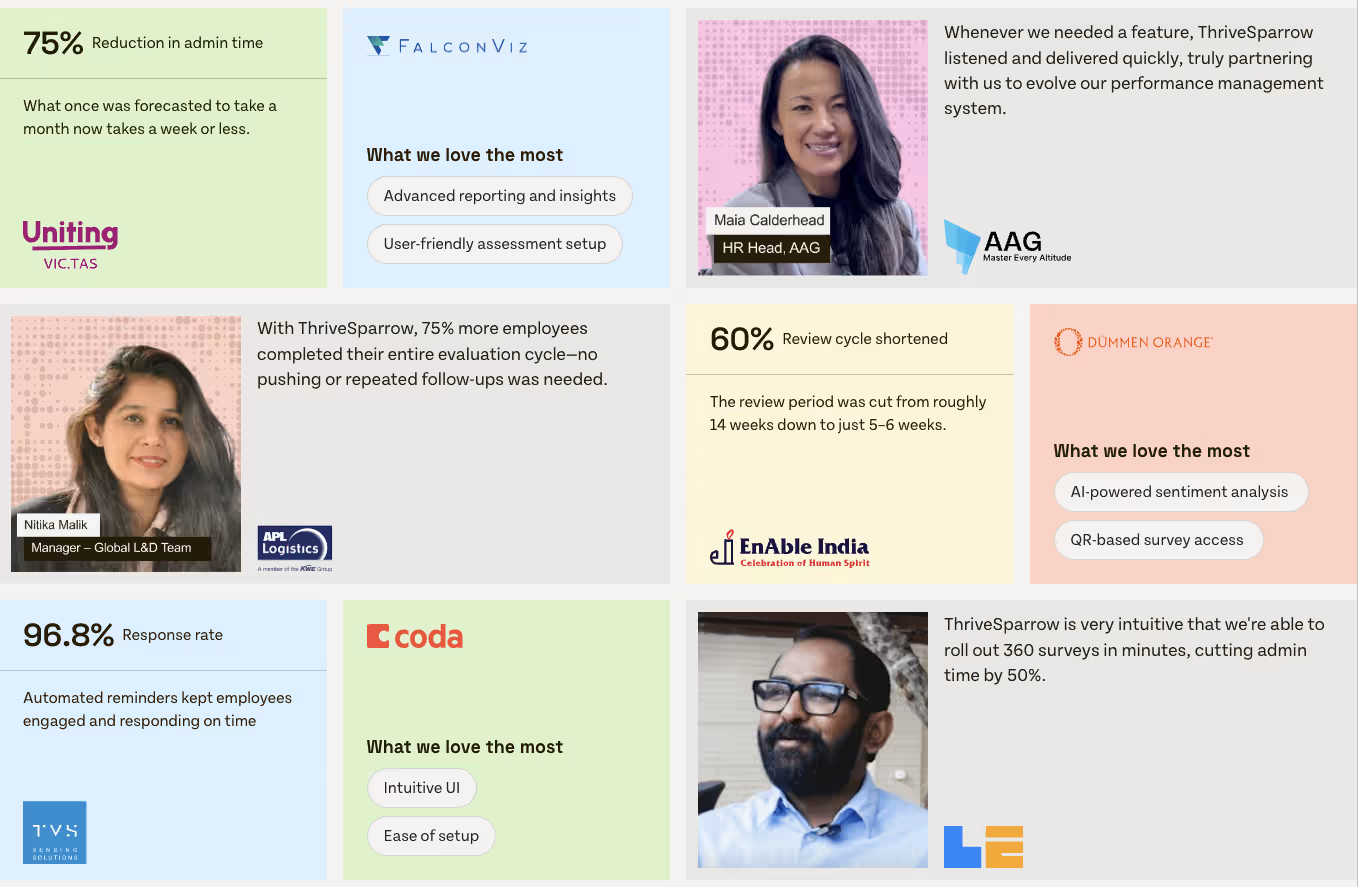
That lighter setup isn't just a claim. Uniting (VIC.TAS) reports cutting admin time by 75%, turning a rollout that was originally forecasted to take a month into one that takes a week or less. EnAble India shortened its review cycle by 60%, and TVS Sensing Solutions saw a 96.8% survey response rate after switching. (See the "Real Stories, Real Results" section further down for more.)
Start Your Free Trial →
.svg)
Quick Context Before We Compare
Everything above was about Culture Amp on its own terms — real pricing data, real rollout timelines, real user complaints. If you're still weighing your options, it helps to see what else is out there. Here's a look at the platforms people most often compare Culture Amp against.
Top Culture Amp Alternatives
- Lattice — closest to Culture Amp in scope. More heavily oriented toward OKRs and performance management.
- Leapsome — a well-built all-in-one tool. May require more configuration depending on the rollout.
- 15Five — simpler check-ins and recognition. Lighter than Culture Amp, with less depth in analytics.
- Qualtrics — a top-tier survey engine. Can offer more depth than many everyday HR teams need.
- ThriveSparrow — engagement, performance, and recognition in one plan. Built around clear pricing and a lighter rollout.
One thing worth knowing if you're comparing closely: ThriveSparrow's third focus area is recognition, not the structured career-development tool Culture Amp offers through Skills Coach — so the overlap between the two platforms isn't exact.
How ThriveSparrow Compares with Culture Amp
Both platforms have real strengths in employee engagement and performance management. But they're built for different needs. Here's the direct comparison between ThriveSparrow and Culture Amp:
Note: This comparison focuses on capabilities where the two platforms differ most. Feature availability can vary by plan and may change over time, so verify requirements with each vendor before making a purchase decision.
See how Culture Amp and ThriveSparrow compare across features, pricing, and fit.

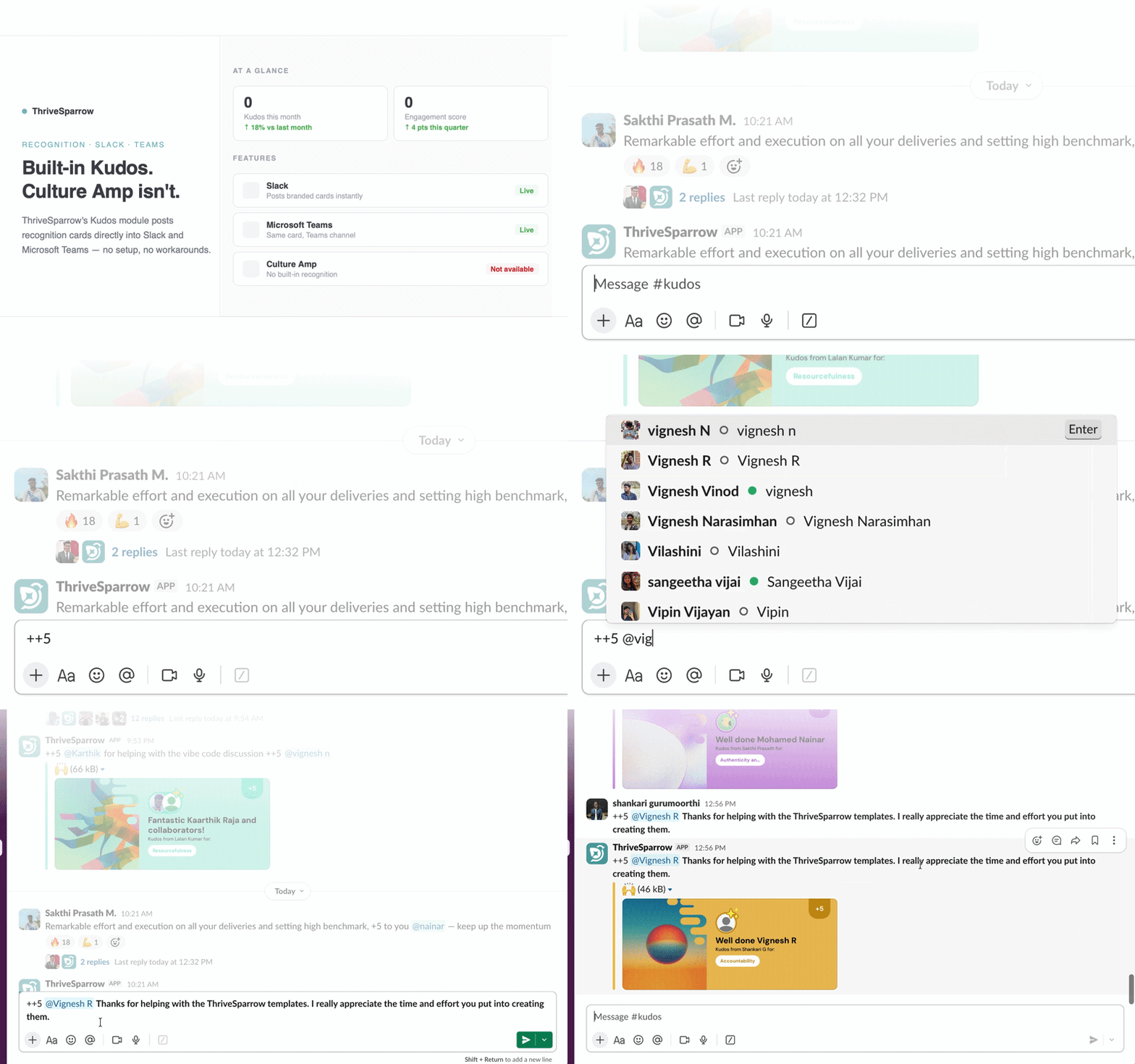
What Sets ThriveSparrow Apart
- Personalized Development Plans: ThriveSparrow's AI builds a growth path for each employee. This cuts down the manual work of building development plans by hand.
- Action-Oriented Feedback: ThriveSparrow provides workflows designed to help teams turn survey insights into follow-up actions.
- Automation for Recognition: Built-in leaderboards and custom points cut down the manual work behind employee recognition.
- Team-Level Analytics: Heatmaps and performance group reports make it easier to spot and fix problems at the team level.
Choose Culture Amp if:
- You need a well-known platform with deep customization for a large, multi-year rollout
- Your company already runs on ADP or a similar HRIS and wants tight native integration
Choose ThriveSparrow if:
- You want engagement, performance, and recognition together, with clear, upfront pricing
- You want a lighter implementation process and a faster path to launch
- You want survey insights tied more directly to follow-up actions
Think ThriveSparrow is the better fit? Start Your Free Trial →
(Still want more options? See other Culture Amp alternatives.)
If you're still comparing your options, you don't have to make the decision based on one review alone. Use the buyer kit below to compare the platforms against your own requirements before you commit.
FREE BUYER RESOURCE
Comparing Culture Amp with other alternatives? Download the Buyer Kit Before You Decide.
Not sure which employee engagement platform is the right fit for your team?
The Culture Amp Buyer Kit gives you a practical framework to compare Culture Amp with Lattice, Leapsome, 15Five, Qualtrics, and ThriveSparrow — and evaluate each platform against your own requirements.
Inside the kit:
- ✓ Buyer checklist
- ✓ Culture Amp alternatives comparison
- ✓ Vendor evaluation scorecard
- ✓ Implementation checklist
- ✓ Switching checklist for existing Culture Amp users
Use it to shortlist vendors, score your options, and identify the questions you should answer before signing a contract.
Real-World Implementation Analysis
Rolling out Culture Amp shows both its strengths and its real challenges. A good rollout takes careful planning and real change management. This isn't a tool you can just turn on overnight.
Deployment Timeline and Requirements
Here's what a typical rollout looks like:
Some buyer reports describe a rollout of around two months from setup to full launch. These phases can overlap, so the total rollout period may be shorter than the sum of each phase.
Change Management Challenges
Some recurring issues mentioned in reviews include:
- Complex survey setup that takes real time to build
- Users pushing back because notifications aren't reliable
- Trouble connecting it to existing performance review steps
- Feeling overwhelmed by paperwork and guides during training
As one user put it: "The setup of the Year-End Performance Review was incredibly intensive, with questions coming up frequently." This shows why it's smart to set aside real time and staff for the rollout.
Why this matters: If your HR team is already stretched thin, a multi-week setup isn't just annoying — it's a real cost. It's time your team could spend on other work that quarter.
Success Stories and Failures
Integrations can be an important part of successful deployments. Well-configured integrations can make it easier to keep HR data and communication workflows connected.
Some rollouts hit problems, though. Feedback management is a common pain point. Some users say it's hard to track and organize responses over time. As Rachel A. put it: "I wish I could create our own 1-on-1 templates and have a comprehensive page for each direct report rather than just a feed."
Real-time feedback gets mixed results across companies. Some teams build strong, ongoing feedback loops. Others run into notification problems that slowly hurt adoption. The outcome depends heavily on how well the platform fits the company's existing processes.
ROI and Business Impact Assessment
Judging ROI for an engagement platform means weighing the cost against the real value it creates over time. Here's what the numbers and real users show.
Measurable Performance Metrics
Culture Amp shares a few performance numbers from companies that use the platform:
- 1.3x higher likelihood of hitting financial targets
- 3x greater effectiveness in managing organizational change
- 2x improvement in innovation
Worth noting: these numbers come from Culture Amp itself, not from outside research. Treat them as a general sign of what a well-run program can support — not a promise for your team. As a helpful cross-check, some buyer data reports a payback period of around 11 months.
Long-term Business Benefits
Culture Amp's value tends to show up over time in a few key ways:
- Growth plans built for each person, which help with retention
- Continuous feedback loops that improve performance over time
- Skills Coach, which supports ongoing leadership growth
David Paone, Senior People & Culture Advisor at Brownes Dairy, put it this way: "Using Engagement and Performance together has really helped. Culture Amp is a fantastic way for managers to get a holistic view of an individual's performance. It brings an unbiased view from that year."
Connecting Culture Amp with your other HR systems adds up over time. That means less admin work and more accurate data. For companies that stick with it, that also means better retention and lower hiring costs.
Not sure the ROI makes sense for your team size? Try ThriveSparrow's disengagement cost calculator to see what disengagement is really costing you right now.
Integration Ecosystem
Integrations are a real strength here. Culture Amp connects both ways with ADP, Slack, Microsoft Teams, Google Workspace, and most major HRIS platforms, plus SSO for logins. Its API and webhook system support custom alerts and automation. That said, some users report occasional delays in notification delivery through certain channels.
Data Security and Compliance
Security is a real strength too. Culture Amp uses strong encryption for data both at rest and in transit between connected systems. It also includes role-based access control, audit logs, and compliance monitoring. The platform holds SOC 2 Type I certification, per its own published security information. Culture Amp publishes information about its GDPR and CCPA compliance practices. Some advanced security features may be limited to higher-tier plans. So before you sign, confirm your compliance needs (HIPAA, GDPR, etc.) directly with Culture Amp's sales team.
ThriveSparrow's Real Stories, Real Results
Numbers and feature tables only tell you so much. Here's what some teams have achieved using ThriveSparrow:
Want to evaluate it for your own team? Start a free trial →
Conclusion
Culture Amp is a genuinely strong employee engagement platform. It's a great fit for mid-to-large companies. These are companies that want engagement measurement, performance management, and employee development all on one connected system. That strength comes at a real cost — in dollars (even though you won't know the exact number until sales sends a quote), and in the weeks of setup and change management it takes to get full value from it.
Companies that make good use of Culture Amp's integrations with tools like ADP and Slack may be better positioned to connect HR data and workflows. Teams that underestimate the setup work, or don't need all three modules, often end up paying for more than they use.
If you're already deep into evaluating Culture Amp, this is the trade-off that matters most: depth and integration versus clear pricing and a faster setup. If your team wants a lighter rollout and more upfront pricing, ThriveSparrow is worth checking out alongside Culture Amp.
If the sales-gated pricing and multi-week rollout are the parts giving you pause, ThriveSparrow is worth evaluating for those priorities. Start Your Free Trial →
Related reading: Full Lattice Review · 15Five Alternatives · Best Performance Management Software · Best Employee Engagement Software
FAQ
1. Is Culture Amp worth the price?
For larger organizations with dedicated HR or People Ops resources, the platform's depth may justify the cost. For smaller teams, the ROI is less clear, especially with pricing hidden behind a sales call.
2. Is Culture Amp good for small teams?
It can work for smaller teams through the Develop module. Some of Culture Amp's deeper analytics and HRIS capabilities may be more valuable to larger organizations. Smaller teams often find lighter, more clearly priced tools work better.
3. How much does Culture Amp cost?
Culture Amp doesn't publish its prices. You'll need to request a custom quote. Outside purchase data shows the middle deal costs about $22,180 a year, with a typical range of $7,700 to $57,793, depending on your team size and modules.
4. How long does Culture Amp take to implement?
Some buyer reports describe a full rollout of around two months, although larger or more complex companies may take longer.
5. Does Culture Amp integrate with Slack and Microsoft Teams?
Yes. Culture Amp connects directly with both, for feedback delivery, survey distribution, and Skills Coach lessons.
6. Is Culture Amp SOC 2 certified?
Yes. Culture Amp holds SOC 2 Type I certification, according to its own security page. Confirm current certification status and any compliance needs (HIPAA, GDPR) directly with their sales team.
7. What's the biggest complaint about Culture Amp?
Notification problems and messy feedback organization come up a lot in reviews. Several users want better 1-on-1 templates and a more organized feedback page for each person, instead of one single feed.
8. What's a good Culture Amp alternative for smaller budgets?
Several platforms may be worth considering depending on your requirements. ThriveSparrow is one option for teams looking for engagement surveys, performance reviews, recognition, and upfront pricing.
9. Can Culture Amp handle both engagement surveys and performance reviews?
Yes — that's its main strength. Engagement, performance management, and employee development run as three connected modules, not separate tools.
10. Does Culture Amp offer a free trial?
Culture Amp sells through custom demos and sales-guided onboarding, not a self-serve free trial. Confirm current trial options directly with their sales team.


