












Losing an employee is expensive. The Society for Human Resource Management says replacing one person can cost 50% to 200% of their yearly salary once you count recruiting, training, and the slow ramp-up time for someone new. And it happens a lot. Federal labor data puts the U.S. at roughly 3.2 million quits a month as of mid-2026.
Most articles on employee retention strategies jump straight to fixes. They skip the part where you figure out why your people are actually leaving. This guide does it the other way around. We'll help you spot the real problem first, walk through strategies grouped by what they actually fix, and finish with a simple way to check if any of it worked.
Not sure what's going on yet? Start with the section below on why people leave.Already know your problem? Skip straight to the strategy that fits.
Prefer to watch instead of read? This video covers everything below—including the 7 retention strategies, the retention rate formula, the difference between exit and stay interviews, and everything else you need to know.
What Is an Employee Retention Strategy?
Here's what employee retention means in plain terms: it's how well your company holds on to the people it wants to keep. An employee retention strategy is what you actually do about it. It's the real actions around pay, growth, management, and culture that push that number up.
A strategy and a rate aren't the same thing. The rate is just a number: the percentage of people who stuck around over a certain time. The strategy is your plan for improving that number. You'll find the formula for figuring out your own rate a little further down.
Why Retention Matters, and Why People Actually Leave
Turnover doesn't just disrupt your team. It costs real money. Multiply that 50% to 200% replacement cost across even a few departures a year, and you can see why retention of employees deserves real attention. This isn't about how it looks on a slide. It's about the math.
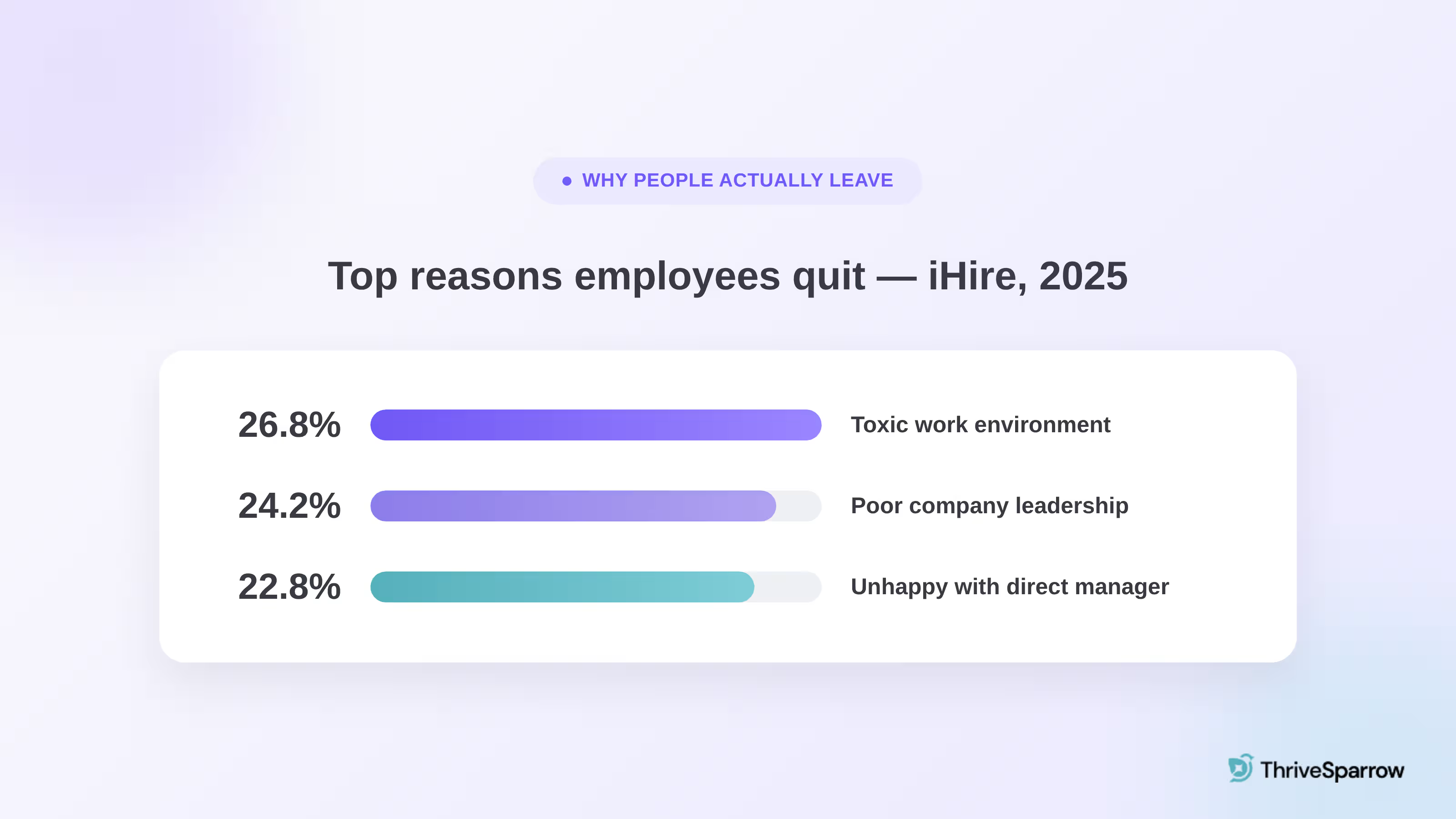
People rarely leave just because "a better opportunity came along." iHire's most recent Talent Retention Report found that a toxic or negative work environment was the top reason employees quit in 2025 (26.8%), followed by poor company leadership (24.2%) and unhappiness with a manager (22.8%). Gallup found something similar from the other direction: employees who feel genuinely recognized are 45% less likely to have left within two years.
(Want the full picture? Check out our top employee retention factors rundown.)
Pay and perks matter too, but they're rarely the whole reason someone leaves. Salary usually has to be noticeably below market, not just "a little low," before it becomes the deciding factor.
Here's something worth saying out loud: not all turnover is bad. If someone was never the right fit, or your company genuinely can't offer the growth they need, them leaving isn't automatically a failure. Sometimes it's healthy for everyone. The strategies below focus on regrettable turnover — good people leaving for reasons you could have fixed.
Engagement vs. Retention
People use these two words like they mean the same thing, but they don't. Employee engagement and retention are connected, not identical. Engagement tells you how invested someone feels right now. Retention tells you whether they actually stayed. Engaged people usually stick around, but someone can also stay just because they haven't found anything better, without being engaged at all. That gap matters. A team that "stays" without being engaged still shows up in lower output and less effort long before anyone actually quits.
The stats above are industry-wide — your team's real reasons might differ. Download the free employee retention survey template and ask them directly before you pick a strategy below.
Employee Retention Strategies, Organized by What They Actually Fix
These seven areas make up a real, workable staff retention plan. Pick the ones that match what you found above. You don't need to tackle all seven at once.
1. Compensation, Fairness & Perks
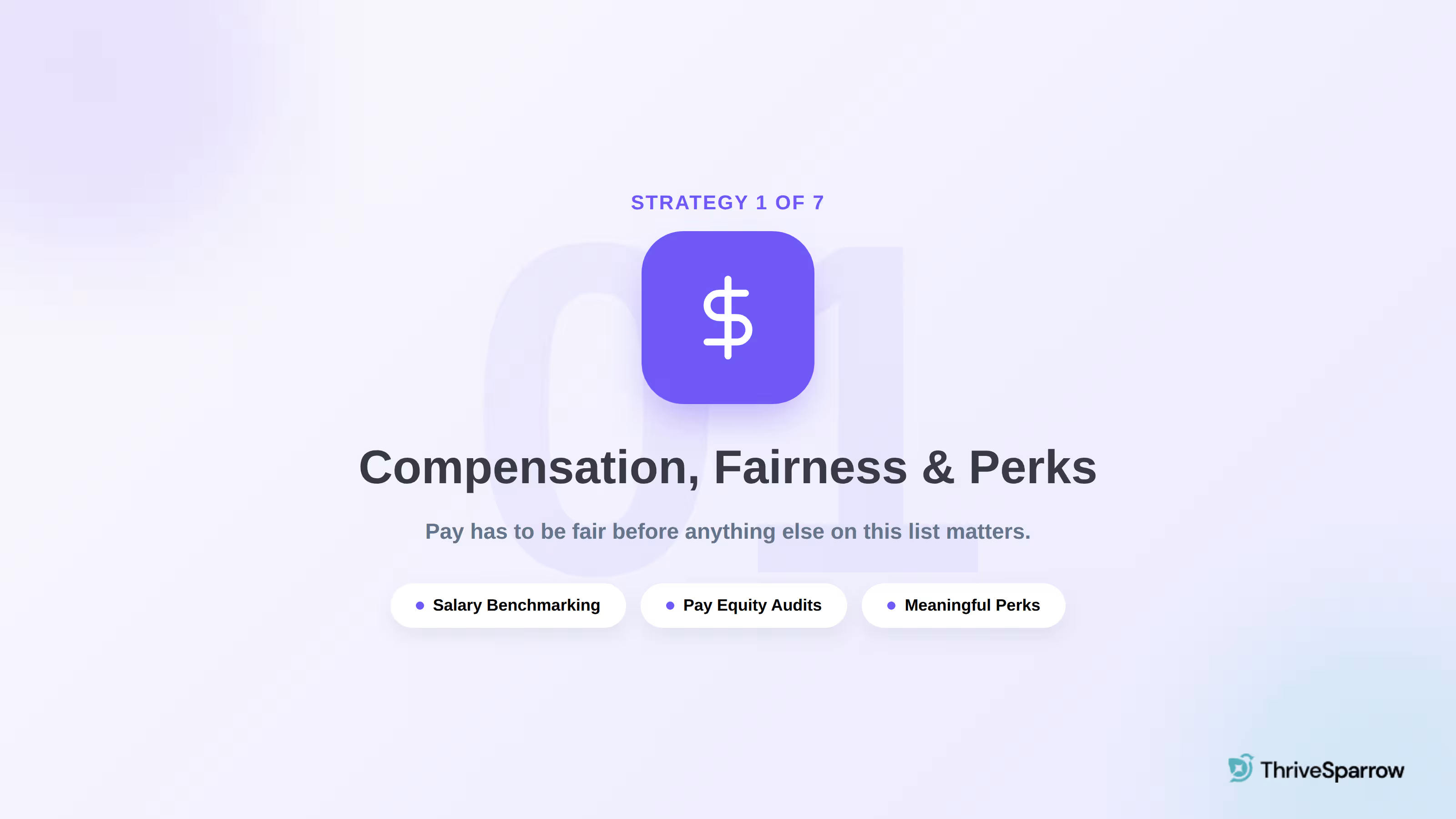
Pay has to be fair before anything else on this list really matters. If your compensation is genuinely below market, no amount of recognition or flexibility will fix retention on its own. Check your salaries against your industry and region every year, and be open about how you make pay decisions. Secrecy breeds more resentment than a real gap ever does. Perks matter more than people expect, but only the ones people actually use.
Flexible schedules and remote-work stipends beat novelty office perks every time, according to what employees themselves say they value. A pay equity audit checks whether people doing similar work get paid similarly, no matter their gender, race, or tenure. Skip this, and the gap quietly pushes your best people toward the door.
Example: a mid-size logistics company ran a pay equity audit and found a 6% gap between two roles doing identical work. Fixing it cost less than replacing the two employees who would have left otherwise.
2. Growth & Career Path
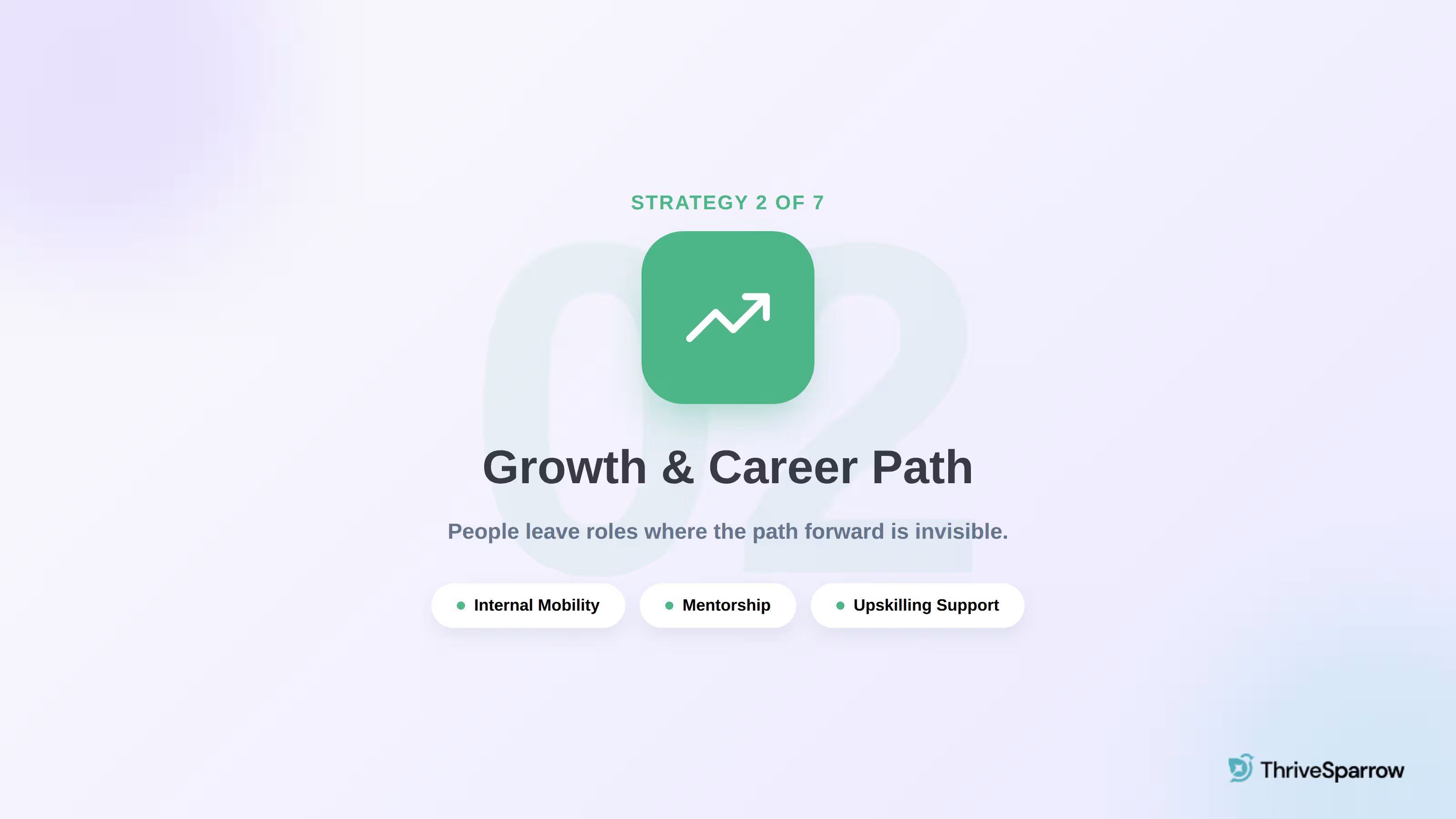
Talent retention often comes down to something simpler than pay: can people see a future here? People rarely leave jobs with a real path forward. They leave jobs where that path is invisible. Internal mobility, giving your own employees first shot at open roles before you hire outside, shows people that growth is real, not just a line in the handbook. Pair that with mentorship, matching newer employees with people who've already walked the path they want, and a little investment in up skilling: tuition help, course stipends, or paid time to learn something new.
Example: at Dümmen Orange, a global flower and plant grower, feedback from frontline employees pointed to gaps in training and recognition. So the company built its own internal training program, called "Orange Academy," in response. It's a small example of a bigger pattern: growth gaps that actually get fixed turn into resignations far less often than the ones that just get written down and forgotten.
3. Manager, Leadership & Communication
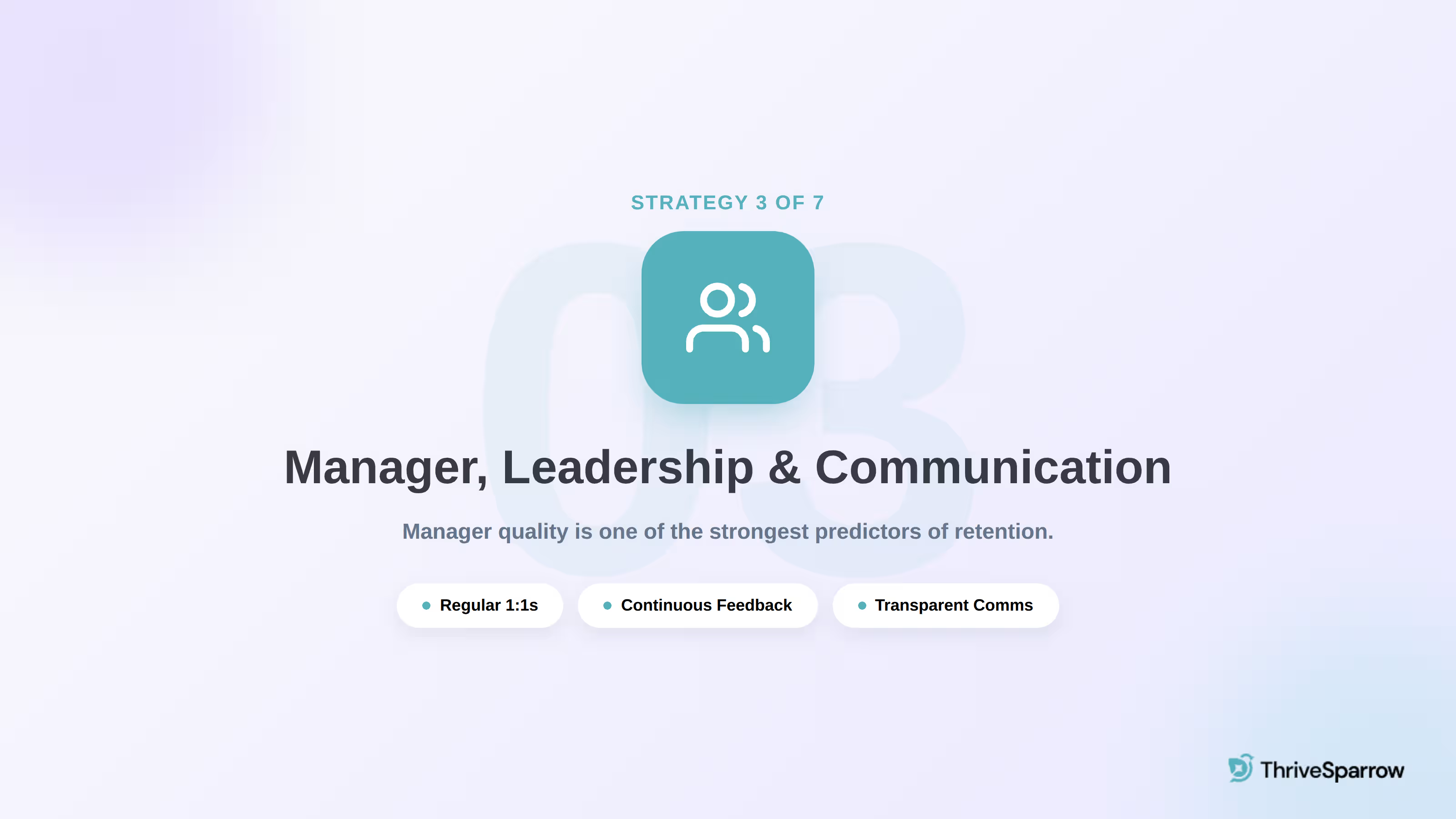
Manager quality shows up in almost every source we cite here as one of the biggest predictors of whether someone stays. Real, regular one-on-ones and continuous feedback do more for retention than a once-a-year review ever could, simply because problems get caught while they're still fixable. There's another piece people overlook: clear communication from leadership during change. Layoffs, reorgs, even small strategy shifts. If leadership goes quiet or vague during any of these, trust erodes fast, no matter how good the day-to-day managers are.
Example: a company going through a leadership change held all-hands updates every two weeks, even when there wasn't much new to say. Voluntary turnover during that stretch came in below their usual average.
4. Culture, Recognition & Belonging
Recognition works best when it's specific and comes right after the achievement, not saved up for an annual awards night. Employee resource groups and other DE&I efforts build a sense of belonging that you can't fake with a mission statement. Culture that people actually live day to day, not just something written on a careers page, is what shows up in your retention numbers.
Example: a retail chain started letting any employee publicly thank a coworker. Belonging scores went up, and early-tenure turnover dipped alongside it.
5. Flexibility & Wellbeing
In most industries, flexible and remote work aren't perks anymore. They're expected, and not having them is now a real reason people give for leaving. Clear boundaries around after-hours messages protect the work-life balance that flexibility is supposed to give people in the first place.
If you offer flexible hours but still expect people to answer emails at 9 p.m., you've cancelled out the benefit. Wellness offerings like mental health coverage or financial wellness tools only matter if people actually use them, not just if they're listed in a benefits packet.
Example: at Pimberly, a UK SaaS company, an anonymous engagement survey brought up enough feedback about time off that leadership introduced a new Christmas holiday policy with extra days. It's a direct line from "we asked" to "we changed something people actually wanted."
6. Onboarding & First 90 Days
Staff retention starts way before someone's first performance review. It starts on day one. A structured onboarding process that goes past paperwork, one that actually explains how the team works, who to ask for what, and what success looks like in the first 90 days, cuts down on early departures. Pairing new hires with a mentor who isn't their manager gives them someone else to turn to for context and support.
Example: a healthcare staffing company built its onboarding around 30, 60, and90-day check-ins and cut first-year turnover among new hires by double digits.
7. Fair, Fast Issue Resolution
This is the one category most retention advice skips completely. How your company handles concerns, harassment, toxic management, conflicts that don't get resolved, is one of the biggest predictors of whether people stay. Most companies treat this as a compliance box to check, not a retention lever. But having a clear, easy way to raise concerns, and actually following through fast, changes how safe people feel speaking up before they quit instead.
HR Acuity's most recent workplace research found that among employees who experienced or witnessed misconduct, willingness to recommend their employer jumped from 36% to 55% once the issue was actually reported, investigated, and resolved. That's a pretty clear sign of how much this affects whether people stay, and whether they'd tell a friend to work there.
Example: a company cut its average time to resolve complaints from three weeks to five days. Referral rates bounced back within two quarters.
How to Measure Employee Retention

Say you started the quarter with 40 employees, and 35 were still there at the end.That's 35 ÷ 40 × 100, which gives you an 87.5% retention rate. What counts as "good"depends on your industry. Retail and hospitality usually run lower than professional services or tech, just because of the nature of those jobs. Compare yourself to your own industry, not a random number pulled from somewhere else.
One thing worth saying clearly: retention rate only tells you about the past. By the time it drops, those people are already gone. It tells you there was a problem, not that there is one right now. Pair it with a leading indicator, like a quarterly pulse survey or a simple employee Net Promoter Score, and you can catch a problem while there's still time to fix it, instead of finding out three months later during an exit interview.
This isn't just theory. When Lucky Duck Games went through a merger, HR switched from an annual survey to weekly pulse checks on work satisfaction, stress, and how people felt about management. The point was timing. Managers could see a dip and step in before it turned into someone quitting.A weekly signal catches a problem months before an annual one ever would.
How to Retain Employees: Building a Plan That Actually Works
Retaining employees isn't a one-time project. It's an ongoing practice, and it comes down to five steps.
- Diagnose. Pull your current retention rate and look back at recent exit interview themes before you decide what to fix. Guessing at the cause just wastes effort on the wrong strategy.
- Prioritize. Pick one or two strategies from the seven above that actually match what your diagnosis points to. Don't try to launch all seven at once.
- Pilot. Run the change for a set trial period before rolling it out to everyone. A pay adjustment shows results on a different timeline than a manager-training program, so let the strategy decide how long the trial should be. Don't just pick a random number.
- Measure. Recheck your retention rate and run a pulse survey to see if the leading indicator moved before the lagging one does.
- Adjust. Retention doesn't have an end date. Treat it as something you revisit every quarter, not a checklist you finish once and forget.
Closing Thoughts
Employee retention isn't something you fix once and check off a list. It's a practice you keep coming back to as your team, your industry, and your people's expectations change. If you take one thing away from this guide, make it this:figure out the problem before you pick a fix. Pull your retention rate today using the formula above, and let what you actually find, not a generic list of strategies, tell you where to start.
If diagnosing before you act is the piece you're missing right now,ThriveSparrow puts pulse surveys, eNPS, and retention data in one dashboard instead of scattered across a handful of spreadsheets.
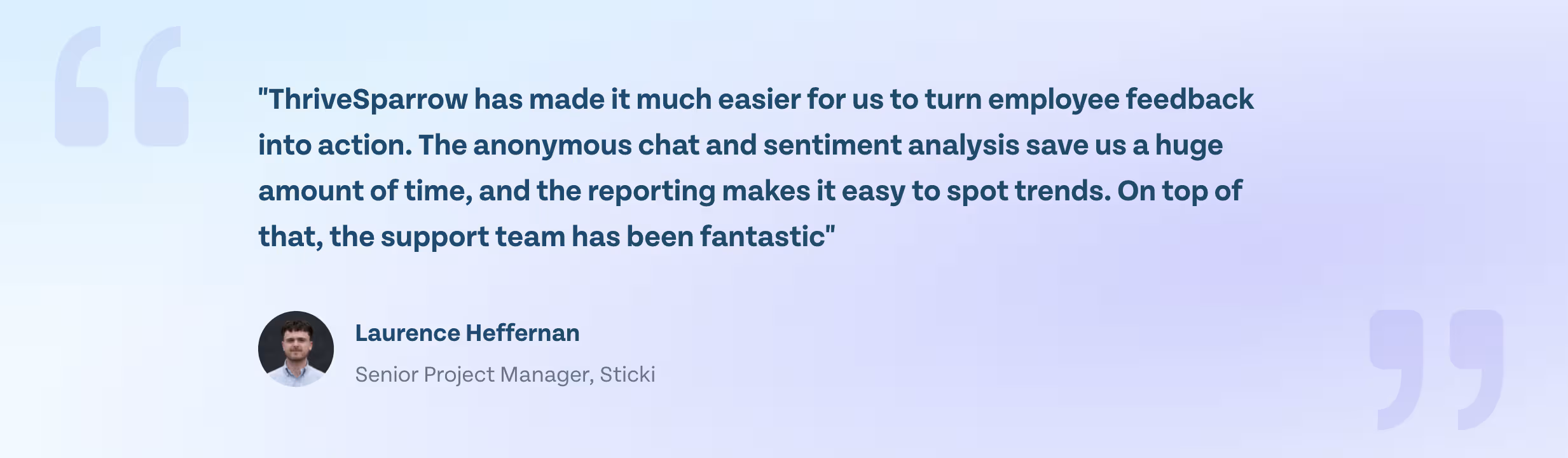
Sticki, an Australian marketing agency, used it to raise their eNPS by 11 points and cut survey analysis time by more than 80%. That's one customer's real result, not a promise of what every team will see, but it's a good sense of what's possible.
Try it free for 14days and see for yourself.
.svg)
Frequently Asked Questions
1. What is a good employee retention rate?
It really depends on your industry. Professional services and tech companies often see annual retention around 85% to 90%, while retail and hospitality tend to run lower because of the nature of those jobs. The better benchmark is your own history. Is this quarter's rate better or worse than last year's, for the same roles?
2. How do you tell if turnover is a red flag or normal churn?
Look at where it's coming from, not just how much of it there is. If turnover is spread evenly across teams and tenure, that's closer to normal churn. If it's concentrated in one manager's team, or mostly hitting your top performers, that's the signal to dig into right away.
3. What's the fastest way to improve retention with a small budget?
Start with the manager and communication strategies above. Regular one-on-ones and honest updates during change cost nothing to put in place, and they're consistently some of the strongest levers you have, well before pay or perks even come into it.