











Officevibe is a solid tool — easy to set up, easy for employees to understand, and its pulse surveys give you an honest read on morale. That's not marketing talk: Officevibe reviews back it up, with a 4.3/5 rating across 1,076 G2 reviews.
But somewhere between "here's your engagement score" and "here's what to do about it," most teams hit a wall. The dashboard tells you something changed. It rarely tells you why, which team, or what a manager should actually say in Monday's 1-on-1.
That gap is exactly why teams start looking for an Officevibe alternative — specifically, employee engagement software or performance management software built to go further than measurement. This guide covers 11 real alternatives: what each one solves, what it costs, and the moment Officevibe stops being enough.
What this guide covers:
- What Officevibe does well, and where it stops
- 11 alternatives compared on features, pricing, and fit
- A full comparison table and a self-selection guide
- Pricing, anonymity, and how Officevibe stacks up against specific competitors
The Best Officevibe Alternatives for 2026
If you're scanning rather than reading, here's the shortlist:
Prefer a quick walkthrough? Watch this video to explore the best Officevibe alternatives in 2026 before diving into the full comparison.
Before you pick from that table, it's worth answering one question first: do you actually need to switch?
What Is Officevibe?
Officevibe — now sold under the Workleap brand, based in Montreal — is an employee engagement platform built around pulse surveys, eNPS scoring, recognition, and lightweight manager feedback tools. It's simple enough for a manager with no HR background to set up in an afternoon, and it's well-reviewed: 4.3/5 across roughly 1,076 G2 reviews, with ease of use as the top praise.
What it offers:
- Pulse surveys built on 122 science-backed questions across 10 engagement drivers
- eNPS® tracking to measure employee loyalty over time
- Anonymous feedback channels for honest input
- Good Vibes, its peer-to-peer recognition feature
- 1-on-1 meeting agendas and templates
- AI-generated survey summaries and suggested actions (Workleap's Smart Reports)
- Manager dashboards with team-level engagement scores
Is Officevibe Still the Right Fit for Your Team?
Now that you know what it does, here's whether that's still enough for where your team is today. For a team that wants a straightforward, well-built way to measure morale, it does that job well.
That said, limitations show up once a program needs more than measurement: reporting flexibility, survey and team customization, and turning feedback into a concrete next step are what reviewers consistently flag — not missing features, just not deep enough once a team outgrows a flat 20-50 person structure.
Officevibe Pricing starts at $5/user/month billed annually (10-user minimum) — worth knowing before you weigh it against any alternative's cost later in this guide.
Officevibe is still a strong fit if you want:
- A well-reviewed, easy-to-deploy pulse survey tool without a learning curve
- Straightforward eNPS tracking and a proven 122-question survey framework
- Anonymous feedback with clear, documented thresholds (not a black box)
- AI-generated summaries and suggested actions without paying for a full performance suite
- A lighter footprint than Culture Amp or Lattice, with lower setup overhead
If that list matches you, you probably don't need to switch. If it doesn't, the next section covers exactly why teams start looking elsewhere.
Why Are Teams Looking for Officevibe Alternatives?
Most teams don't leave Officevibe because it fails at what it was built for — they leave because their engagement program matured past what it was built for. That distinction matters, especially with only 23% of employees globally feeling engaged, per Gallup. Measuring that number is one job; moving it is another, and it's the job most teams are hiring for.
G2's review themes are consistent: reviewers praise ease of use, fast setup, the core pulse survey experience, and Good Vibes recognition. They flag reporting flexibility, customization limits, the gap between feedback and action, and thin support for 1-on-1s and performance workflows — not because those features are missing, but because they're not deep enough once a team outgrows a flat 20-50 person structure. Here's what that looks like, trigger by trigger.
1. You Need Deeper Reporting and Analytics
Wanting more control over how data is grouped, filtered, and scheduled is the single most repeated theme in negative reviews. Culture Amp and ThriveSparrow are both built for that kind of segmentation.
2. You Want More Control Over Surveys and Customization
Survey frequency, question logic, and team segmentation feel rigid once your org outgrows a flat 20-50 person team. Leapsome and Culture Amp trade some simplicity for configurability.
3. Your Organization Has Outgrown a Simple Engagement Platform
This is the umbrella trigger. Officevibe answers one question well — how engaged are people — but the simplicity that worked at 20 people starts working against a 200-person company with multiple departments and reporting lines.
4. You Need Engagement and Performance in One Place
Officevibe doesn't natively cover performance reviews, career development, or OKR tracking — Workleap sells those as separate modules. ThriveSparrow, Lattice, or Engagedly serve this better; teams missing native goal and OKR tracking specifically should look at Betterworks.
5. You Want More Actionable Employee Insights
This is the feedback-to-action gap — the dashboard tells you the score changed, not what a manager should do about it. ThriveSparrow is built specifically around closing that gap.
6. You're Reassessing the Value You're Getting
Sometimes it's a budget conversation, not a missing feature — per-seat pricing adds up as headcount grows. ThriveSparrow's modular pricing and Bonusly's recognition-first model are worth comparing.
7. Small-Team Reporting Isn't Giving You Enough Visibility
Officevibe's anonymity thresholds — 3 active members for scores, 5 for anonymous feedback — protect employees but can leave a 3-4 person team without much to look at. ThriveSparrow handles this more gracefully at small scale; Bonusly sidesteps it almost entirely.
If one or more of those matches your situation, here's a closer look at all 11 alternatives — what each actually solves, not just a different logo on the same kind of tool.
Officevibe Alternatives Compared: Features, Pricing, and Best Use Cases
You've already seen how these 11 Officevibe competitors stack up on the decision factors that matter. Here's the full profile behind each one.
1. Lattice

Type: Performance management software with engagement features
Lattice is one of the most well-regarded names in the performance management space, handling reviews, goal setting, continuous feedback, and career development with real maturity. Its check-in feature builds lightweight, recurring 1-on-1s into the workflow instead of relegating them to quarterly reviews. One thing to note: the Engagement module is a paid add-on, so cost adds up fast if you need survey depth alongside performance.
Key Features
- Performance reviews with a clean, manager-friendly interface
- Continuous feedback and recognition
- Career pathing and development planning
- Goal setting and OKR tracking
Pros
- Polished UX that managers adopt without resistance
- Strong for employee retention through structured career development
- Large, active HR community
Cons
- Engagement is a separate paid add-on — not included in base pricing
- Gets expensive fast when you combine all modules
- Survey and sentiment depth is lighter than dedicated engagement tools
Pricing
- Performance Management + OKRs & Goals: $11/user/month
- Engagement, Grow: +$4/user/month each
- Compensation: +$6/user/month
Verify current rates on Lattice's official pricing page.
Best For: Companies that put performance management first and want a polished tool with room to add engagement over time.
2. TINYpulse
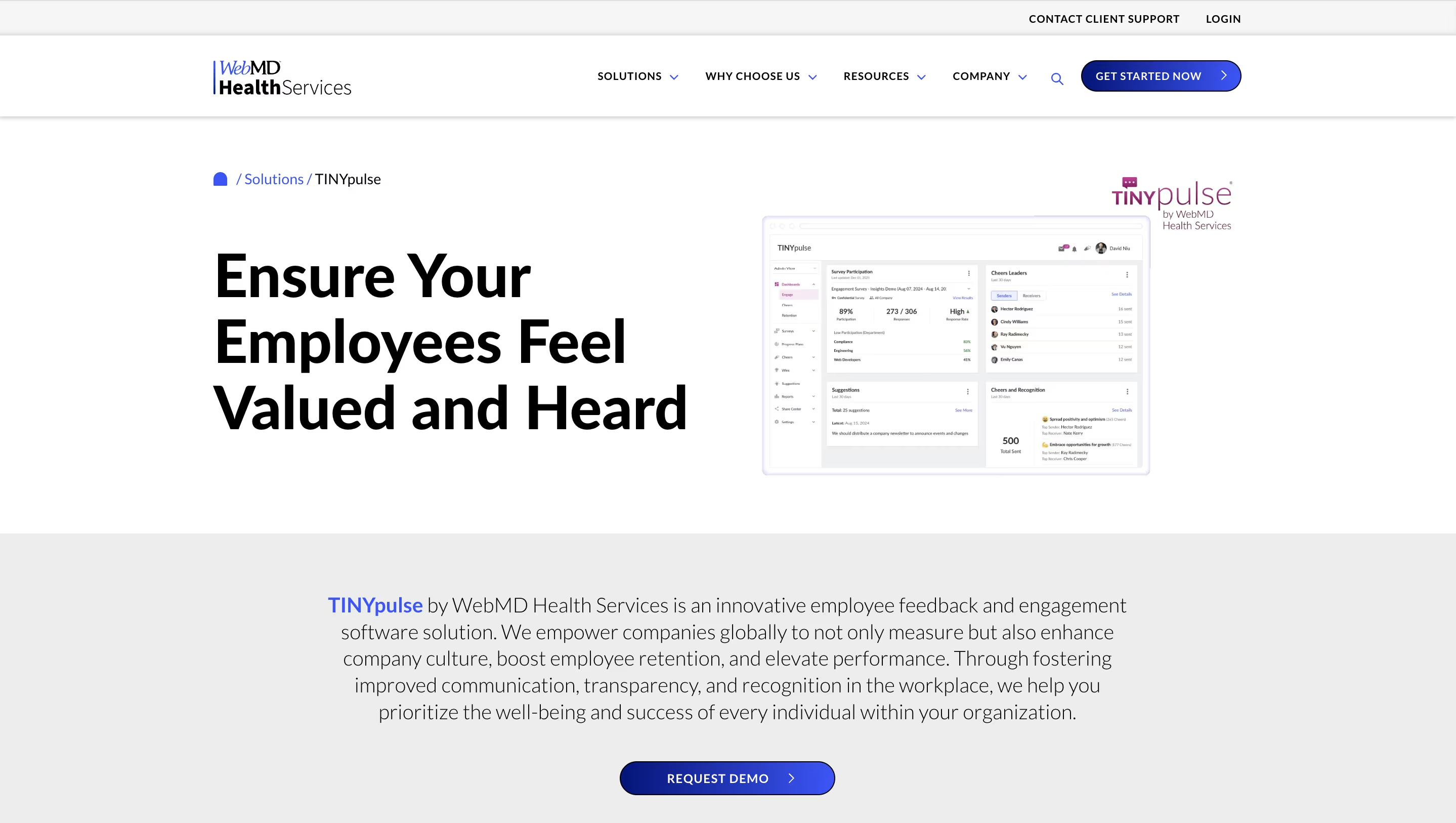
Type: Pulse survey tool with peer recognition and anonymous feedback
TINYpulse was an early mover in this space and remains a solid pulse survey tool for teams that want honest, ongoing feedback without a heavy lift. Its strongest feature is anonymous surveys employees actually trust — when they do, data quality improves significantly. Benchmark comparisons let you measure satisfaction against industry peers, not just your own history.
Key Features
- Frequent pulse surveys for real-time sentiment tracking
- Anonymous feedback channels for honest employee experience data
- Cheers for Peers recognition feature
- Pulse survey benchmark comparisons against industry norms
Pros
- Strong trust in the anonymity mechanism — employees actually use it
- Good early-signal tool for burnout prevention
- Quick to deploy
Cons
- Limited depth on performance management compared to Lattice or ThriveSparrow
- Pricing requires a direct sales conversation — no self-serve option
- Actionable insights are lighter than newer platforms
Pricing: Contact TINYpulse directly for current pricing.
Best For: Teams whose primary need is honest, anonymous pulse feedback and early disengagement detection.
3. ThriveSparrow
Type: All-in-one employee experience platform
ThriveSparrow is a strong Officevibe alternative for teams that want engagement surveys, recognition, performance reviews, goals, and action planning in one connected platform. Most pulse survey tools stop at data collection; ThriveSparrow connects feedback to outcomes, HR gets a continuous feedback loop alongside formal reviews, managers get real-time analytics, and employees get Kudos, its peer recognition module, so wins get seen instead of buried in a Slack message.
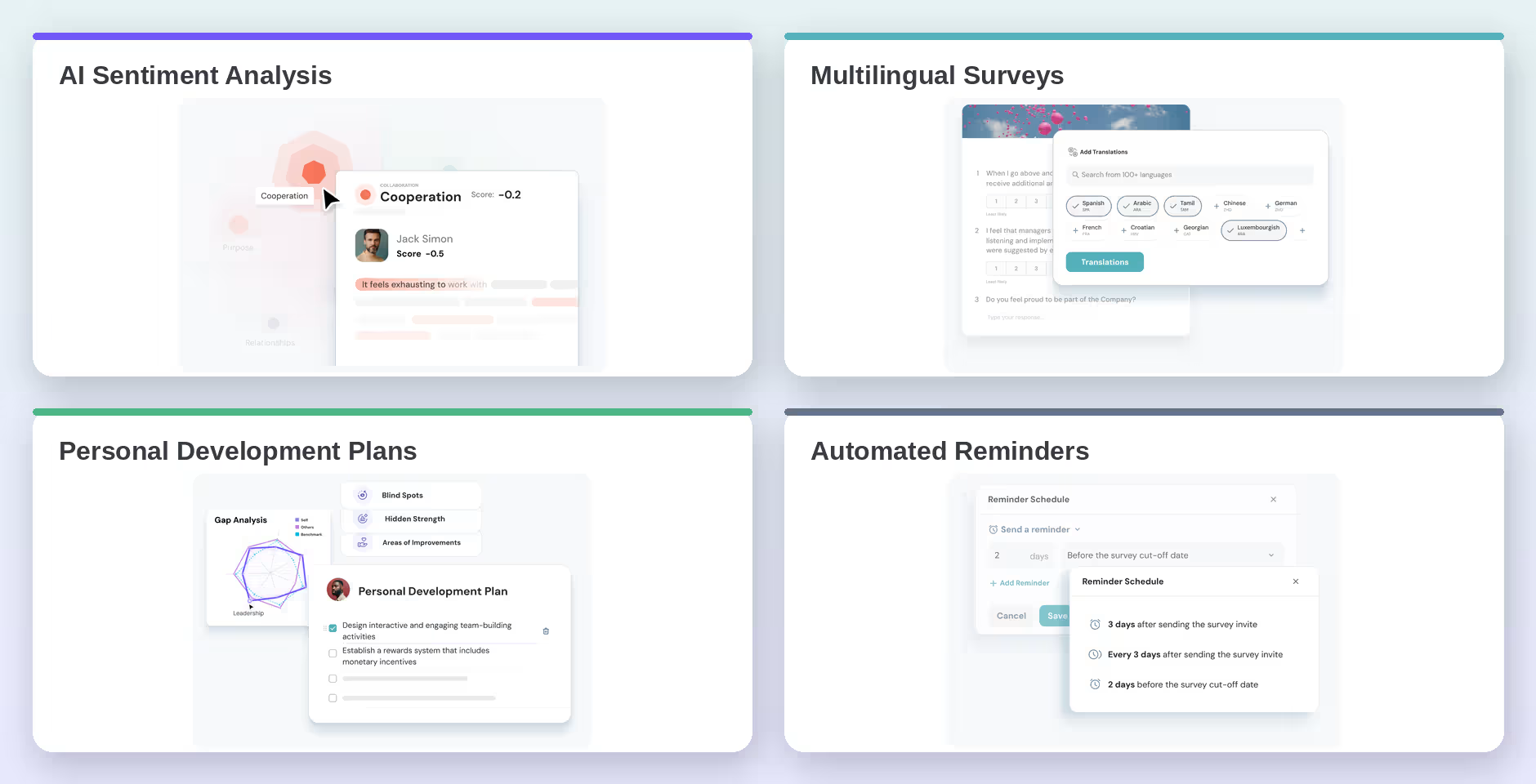
The platform combines engagement surveys, 360-degree feedback, performance reviews, and OKR tracking in one system. When a survey surfaces a morale issue, the action planning layer points managers toward the next step — the data-to-action connection where most standalone tools fall short.
Surveys run in 100+ languages, which matters given Officevibe's own user base skews heavily Francophone through Workleap's Montreal roots.
This isn't just a features list. Sticki, an Australian creator-marketing agency, cut survey analysis time by more than 80% after switching from a legacy engagement tool — a process that used to take 6-7 hours per survey now takes about an hour — and lifted their eNPS by 11 points in the process.
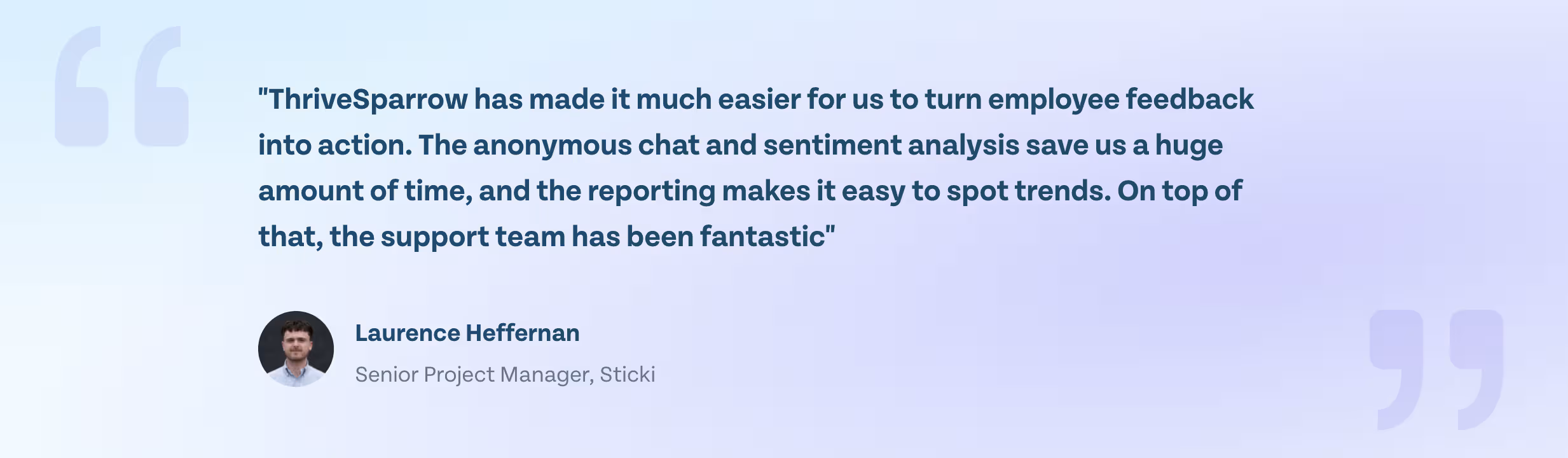
If your team is buried in that same kind of manual reporting, here's the setup that got them there.
Key Features
- Engage module — Pulse surveys, eNPS, and lifecycle surveys with sentiment analysis built in
- Kudos module — Peer-to-peer employee recognition software tied to company values
- Performance module — 360-degree feedback, reviews, and 1-on-1 meeting notes
- Goals & OKRs — OKR tracking connected to company objectives
Pros
- Combines what most teams need from three separate tools into one platform
- 100+ language support for globally distributed and Francophone teams
- Actionable insights layer goes beyond dashboards
- Accessible pricing — starts at $2/user/month
Cons
- Newer to the market than Culture Amp or Lattice, with less brand recognition overall
- Some advanced analytics features are still maturing
Pricing
All plans include a 14-day free trial — no credit card required.
Best For: Mid-market HR teams that want engagement, recognition, and performance in one place without stitching together three subscriptions.
Want to spend less time on manual reporting and more time acting on what surveys actually tell you? Try ThriveSparrow free for 14 days.
.svg)
4. Culture Amp
Type: Employee engagement and people analytics platform
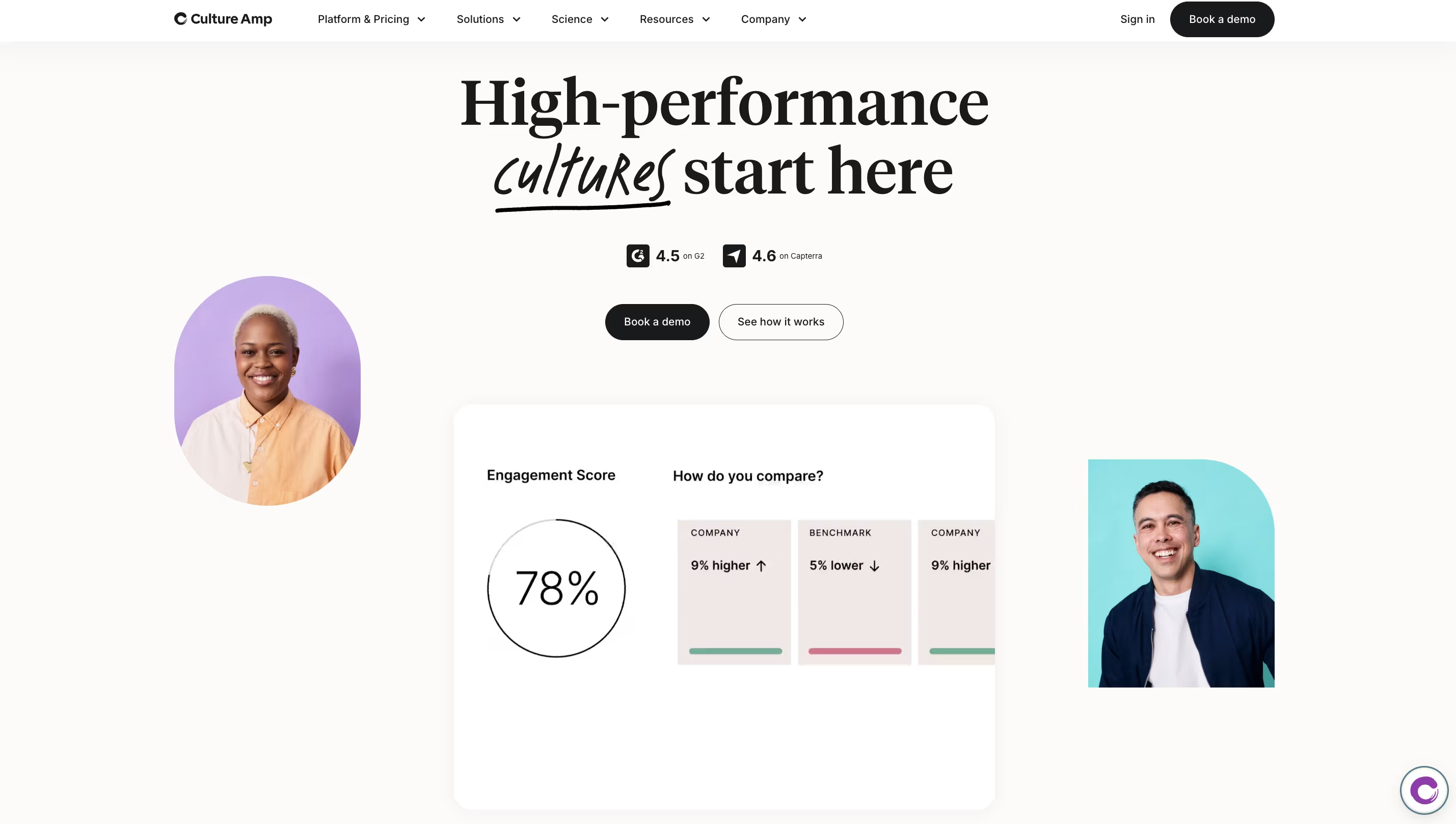
Culture Amp is genuinely strong for large HR teams that need deep sentiment analysis, DEI reporting, and benchmark comparisons — for many enterprises, it anchors their entire people strategy. HR leaders can slice engagement data by department, tenure, location, and demographics to find where culture is eroding.
The honest tradeoff: it's built for enterprise, so a 150-person company is likely paying for depth it won't touch for years. A more modular tool like ThriveSparrow fits those teams better.
Key Features
- Highly customizable engagement and DEI surveys
- Continuous listening tools for ongoing feedback loops
- Performance analytics with industry benchmarking
Pros
- Widely recognized for deep people analytics and enterprise-grade reporting
- Strong DEI measurement and reporting capabilities
- Deep HRIS integration
Cons
- Complex to configure without dedicated HR ops support
- Pricing isn't transparent — requires a sales process
- Can be overkill for mid-market teams
Pricing: Three plans — Engage, Perform, Develop. Request a quote directly.
Best For: Enterprise HR teams with dedicated people analytics needs and the resources to run a complex platform.
5. Engagedly
Type: Performance management and learning platform
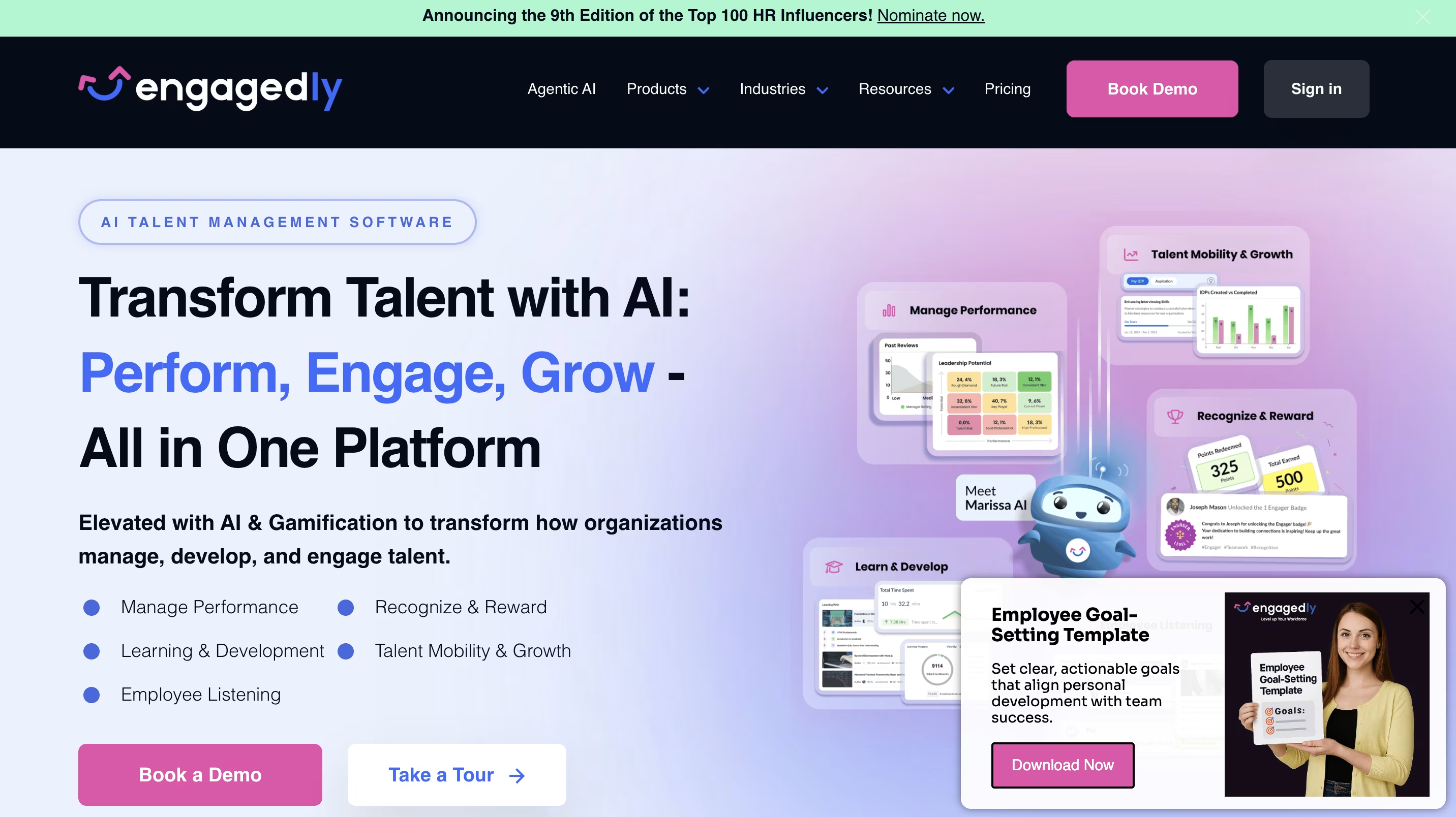
Engagedly takes a performance-first approach to engagement. If your biggest gap is connecting individual development to company goals — with 360-degree feedback software, structured learning, and goal alignment together — it's worth a look. The 360 module gives employees a full picture from peers, managers, and direct reports, and the learning layer adds training program management most engagement-only tools skip.
Key Features
- Goal alignment connecting personal and organizational objectives
- 360-degree feedback with full visibility across levels
- Learning and development module with training program management
Pros
- Strong performance review infrastructure
- Useful for retention through career development
- Combines learning, performance, and recognition in one tool
Cons
- More complex to administer than simpler pulse survey tools
- Pricing adds up quickly with multiple modules
- Less focused on engagement surveys than ThriveSparrow or TINYpulse
Pricing: Quote-based; varies by modules and team size.
Best For: Mid-market to enterprise companies that want rigorous performance infrastructure with learning built in.
6. Bonusly
Type: Employee recognition software with analytics
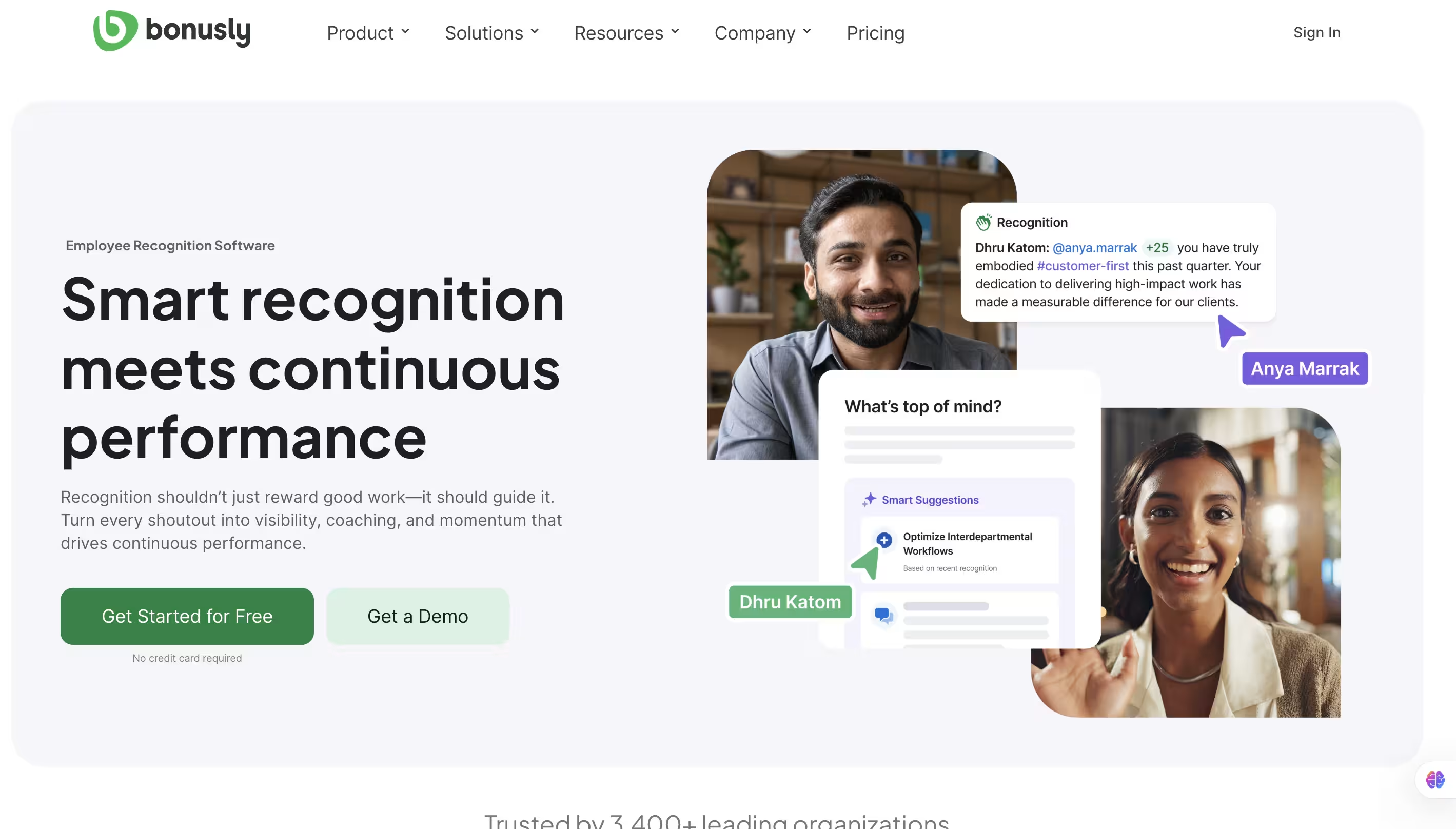
Bonusly sits squarely in the recognition lane — if employees don't feel seen and the rest of your performance infrastructure is already in place, it's a focused, well-executed fix for that specific gap. The points-based system lets employees give each other points tied to company values, which accumulate toward real rewards, making recognition part of daily workflow instead of a quarterly event.
Key Features
- Points-based recognition tied to company values
- Customizable rewards catalog
- Real-time analytics dashboard for participation trends
Pros
- Fast rollout with high adoption
- Useful analytics for identifying underrecognized teams
- Genuinely fun for employees to use
Cons
- Primarily a recognition tool — not a full engagement or performance platform
- No pulse surveys, continuous feedback, or performance review capability
- Works best as a complement to a broader employee engagement platform
Pricing: Tiered Core and Pro plans, plus custom enterprise pricing.
Best For: Companies that already have an engagement or performance platform and need stronger employee recognition software layered on top.
See the full ThriveSparrow vs. Bonusly breakdown if recognition and engagement both matter to you.
7. 15Five
Type: Continuous performance and engagement platform
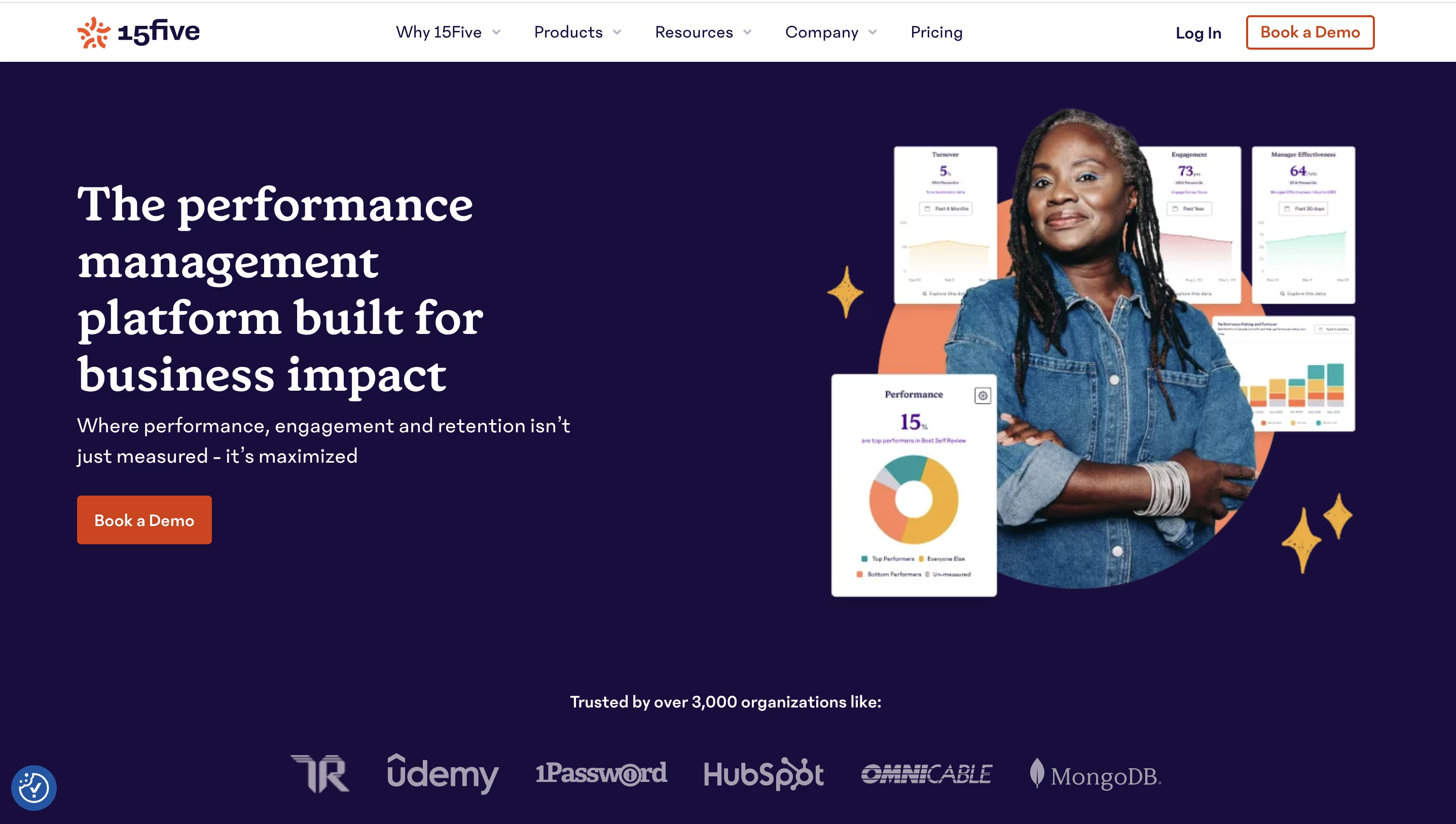
15Five is built around structured, weekly manager-employee conversations instead of annual reviews, with a check-in system that makes the habit easy to maintain. Beyond check-ins, it includes OKR tracking, engagement surveys, and a manager effectiveness layer — and the coaching tools are a genuine differentiator, since most platforms give managers data but not guidance on what to do with it.
Key Features
- Weekly employee check-ins for continuous performance conversations
- OKR and goal tracking
- Manager effectiveness scoring
Pros
- Strong for building consistent manager-employee communication habits
- Good OKR infrastructure
- Manager coaching tools most competitors skip
Cons
- Survey depth is lighter than dedicated engagement platforms like Culture Amp or ThriveSparrow
- Better as a performance and check-in tool than a full engagement replacement for Officevibe
- UI can feel dated compared to newer platforms
Pricing: Contact 15Five directly for current pricing.
Best For: Teams where the manager-employee relationship is the biggest engagement lever.
8. Leapsome

Type: People enablement platform — performance, learning, and engagement
Leapsome covers performance reviews, goal management, learning paths, and engagement surveys in a single, configurable system. That configurability is both its strength and its challenge: you can design a review process or survey cadence that fits your organization exactly, but it requires upfront investment and someone who knows what they're doing to set up properly.
Key Features
- Highly configurable performance reviews and 360-degree feedback
- Goal and OKR management
- Learning paths and development planning
Pros
- Covers performance, learning, and engagement in one platform
- Strong configurability for specific review process needs
- Good employee retention support through structured development
Cons
- Setup complexity is a genuine barrier — not a quick deployment
- Can be expensive for smaller teams
- Requires HR ops investment to get the most out of it
Pricing: Contact Leapsome directly for current pricing.
Best For: Mid-market to enterprise HR teams with the internal resources to implement a configurable platform properly.
See the full ThriveSparrow vs. Leapsome breakdown before deciding on setup complexity vs. flexibility.
9. Microsoft Viva Pulse
Type: Employee feedback tool within the Microsoft 365 ecosystem
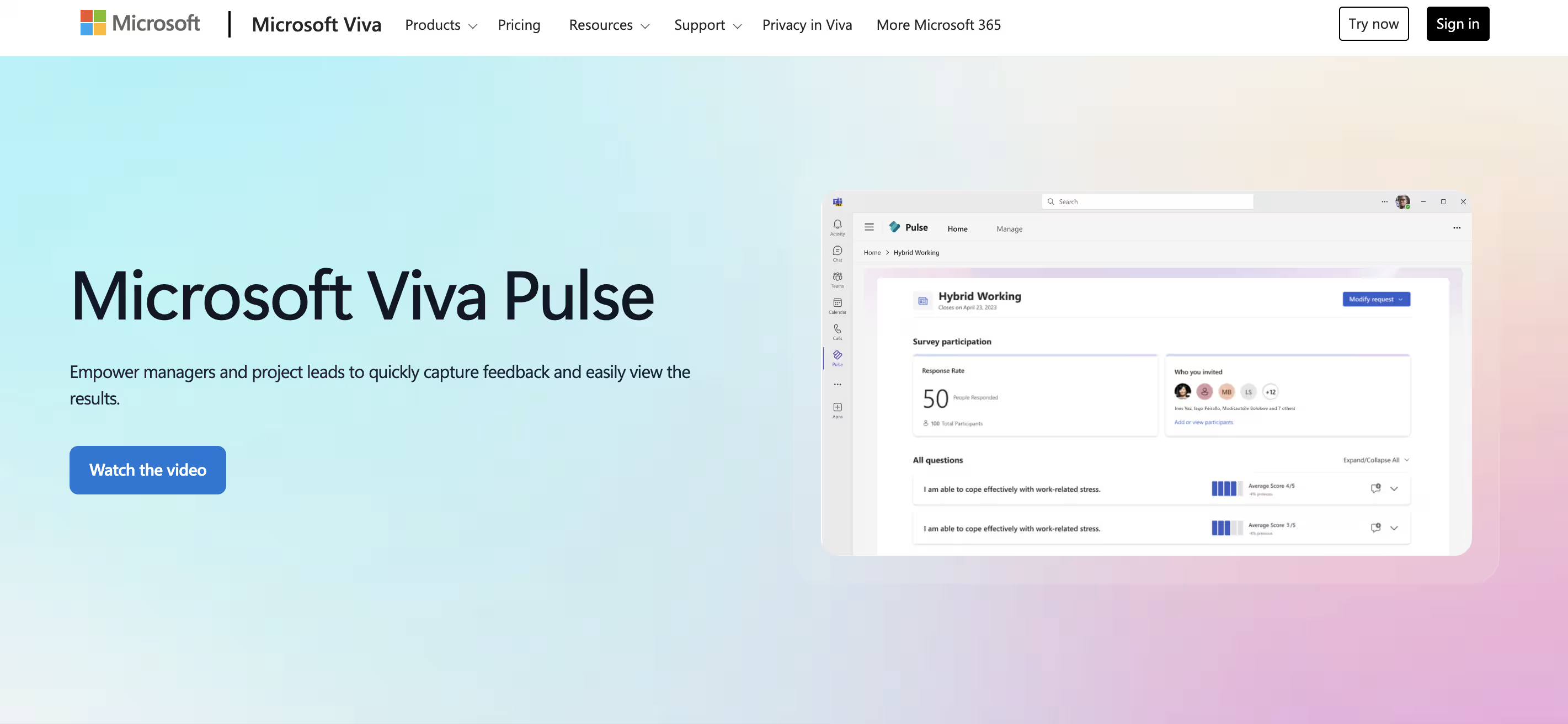
Viva Pulse is built directly into Microsoft Teams — its clearest advantage and its clearest limitation. For organizations already on Microsoft 365, it removes the adoption barrier almost entirely, using AI to help managers interpret survey results and suggest conversation starters. Outside that ecosystem, it loses most of its appeal: it's not a standalone engagement platform, and its depth on sentiment analysis, reviews, or goal tracking is limited compared to ThriveSparrow or Culture Amp.
Key Features
- Native Microsoft Teams integration
- AI-assisted feedback interpretation and manager prompts
- Pulse surveys and quick check-ins
Pros
- Zero-friction deployment for Microsoft 365 organizations
- AI-powered nudges help managers act on feedback
- Familiar interface for employees already in Teams
Cons
- Limited value outside the Microsoft 365 environment
- Less depth on performance management and goal tracking
- Closer to a feedback add-on than a full employee experience platform
Pricing: Included in select Microsoft 365 and Viva Suite plans.
Best For: Organizations already standardized on Microsoft 365 that want lightweight pulse feedback without a separate platform.
10. Betterworks
Type: Goals-and-OKR-first performance management platform
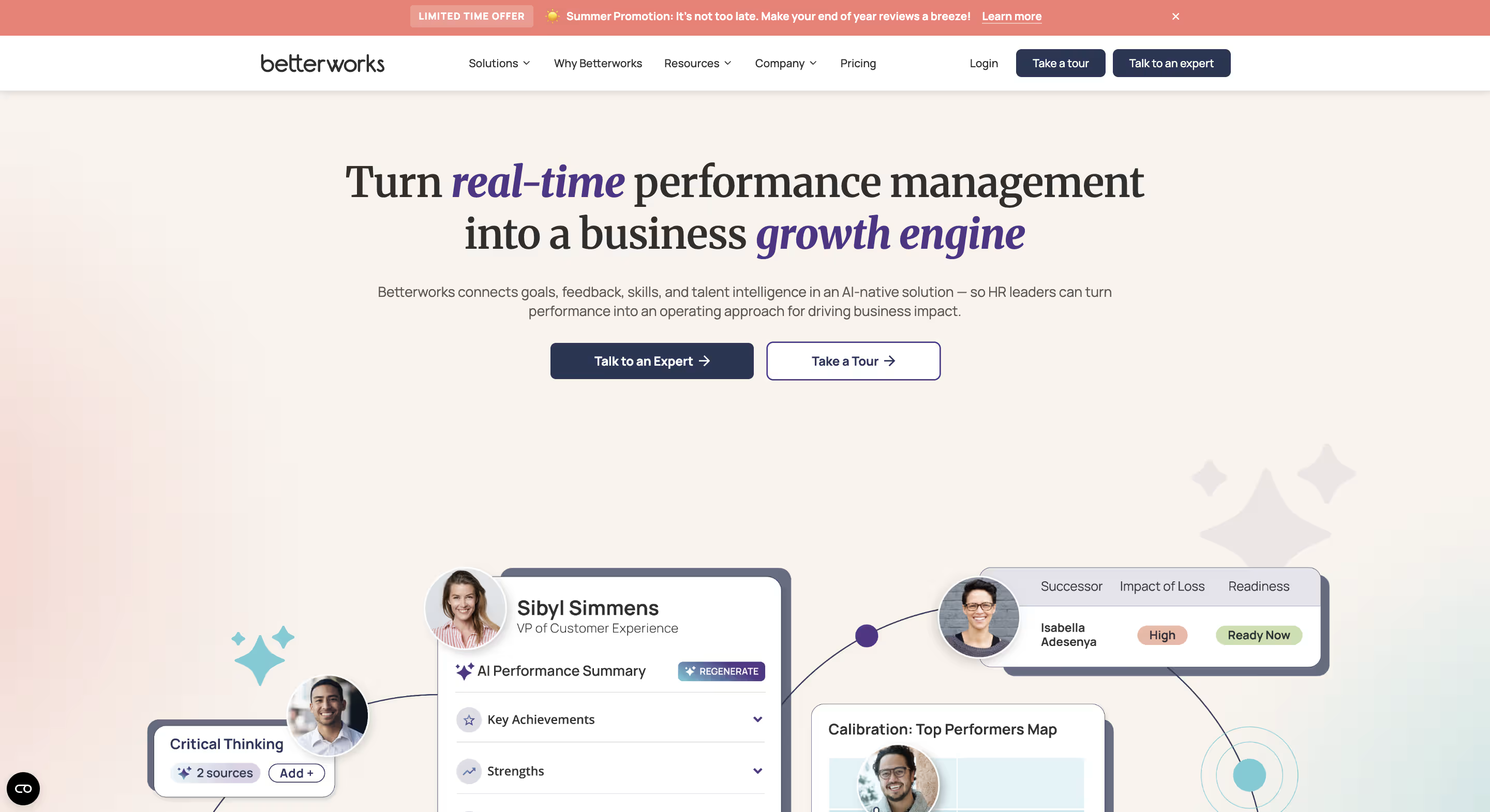
Betterworks is the enterprise-grade choice for organizations that take OKRs seriously as a management discipline. It holds a 4.4/5 rating across 217 G2 reviews and 4.5/5 on Gartner, with cascading goal alignment as its clearest strength — individual objectives connect visibly up to team and company strategy.
The calibration module keeps performance ratings fair and consistent at scale, a genuine weak spot for lighter tools on this list, and AI-generated insights surface patterns a manager reviewing dashboards manually would likely miss.
The honest tradeoff: OKR methodology has a real learning curve and needs organizational buy-in to work, and its engagement module is newer and less mature than its performance and OKR side.
Key Features
- Cascading OKRs connecting individual, team, and company objectives
- Calibration workflows for consistent performance ratings at scale
- Continuous check-ins and AI-generated performance insights
- Integrations with Workday, ADP, BambooHR, Slack, Jira, Salesforce, and Asana
Pros
- Among the strongest OKR and goal-cascading tools on the market
- Calibration module handles fairness at scale better than most competitors
- AI insights genuinely surface patterns, not just summaries
Cons
- OKR methodology requires real organizational commitment to pay off
- Mobile app is functional but less polished than desktop
- Engagement module is newer and less mature than the performance/OKR side
Pricing: Modular, per-employee-per-month pricing across Goals & OKRs, Performance, and Engagement — most organizations pay $6-$18/user/month depending on configuration.
Best For: Enterprise teams that need serious OKR alignment and calibrated performance reviews, with the buy-in to make goal cascading stick.
11. Workvivo
Type: Employee communication and engagement platform
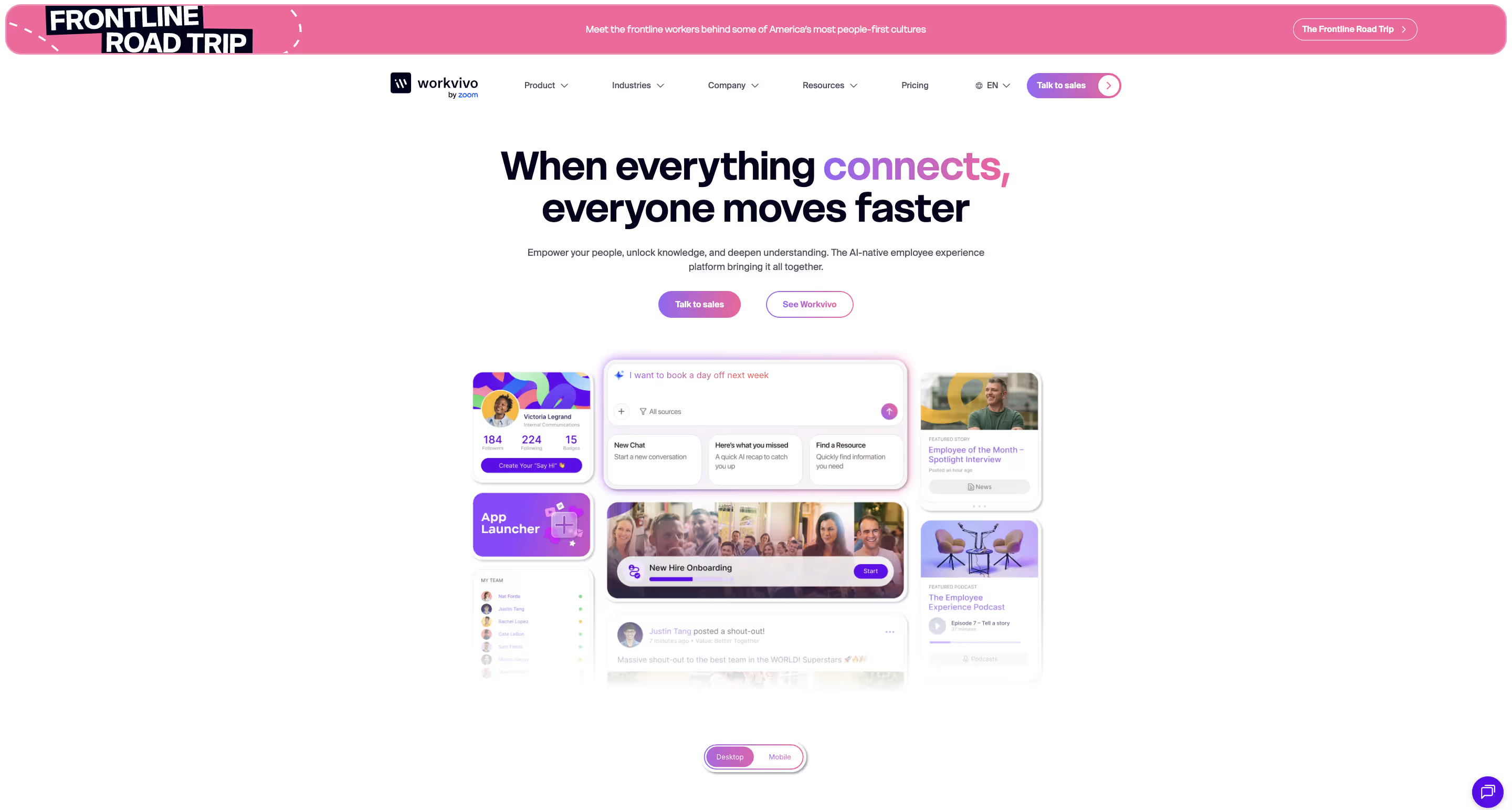
Workvivo — now part of Zoom — is built for large, distributed organizations that need one place to connect, communicate, and recognize employees across geographies and departments, functioning as a social intranet with engagement features layered on. The news feed, recognition hub, and mobile app make it strong for enterprise internal communications, though it isn't the deepest tool for structured performance or feedback workflows.
Key Features
- Employee news feed for transparency and culture updates
- Recognition hub for peer-to-peer acknowledgment
- Mobile app for remote and frontline employee connection
Pros
- Strong for enterprise-scale internal communication
- Recognition infrastructure that feels social, not transactional
- Backed by Zoom's infrastructure
Cons
- Better for communication than structured performance or feedback workflows
- Enterprise-only pricing with no transparent self-serve option
Pricing: Business (100–2,000 employees) and Enterprise (2,000+) tiers — contact for pricing.
Best For: Large enterprises that need to unify internal communications, culture, and recognition across a distributed workforce.
What Should You Look for in an Officevibe Alternative?
You've now seen all 11 in detail. Whether you'd call this employee engagement survey software or performance management software, the strongest platforms in this space tend to share a few traits:
- Deeper employee insights: a continuous feedback system that works between formal review cycles
- Flexible surveys and feedback: anonymous surveys employees trust, with transparent thresholds
- Actionable recommendations: insight that goes beyond "here's your score" to a genuine next step
- Engagement and performance capabilities: 360-degree feedback that goes beyond top-down reviews
- Flexible reporting and segmentation that holds up as your org structure gets more complex
- Pricing that fits your team: modular pricing scales more predictably than an all-or-nothing suite
- Integrations with your HR stack: HRMS integrations that sync data automatically
Still building your survey strategy? Start with this guide to employee engagement survey questions before choosing a platform. With that framework in mind, here's how to match it to your situation.
Which Officevibe Alternative Is Right for You?
Instead of naming one universal "best" tool, here's the self-selection version:
- Choose ThriveSparrow if you want engagement, recognition, performance reviews, and action planning in one platform — without enterprise complexity or cost.
- Choose Culture Amp if you need enterprise-grade people analytics, DEI reporting, and benchmark comparisons.
- Choose Lattice if performance management and career development are your priority and engagement is secondary.
- Choose Bonusly if employee recognition is your biggest gap and the rest of your infrastructure is already in place.
- Choose Microsoft Viva Pulse if your organization runs entirely on Microsoft 365.
- Choose 15Five if consistent manager-employee check-ins and OKR tracking are your main goals.
- Choose TINYpulse if anonymous pulse feedback and honest sentiment data are your primary need.
- Choose Leapsome if you want a highly configurable platform and have the resources to set it up properly.
- Choose Betterworks if native OKR alignment and calibrated performance reviews are your top priority.
- Choose Engagedly if performance, learning, and recognition all need to live in one platform.
- Choose Workvivo if you're unifying internal communications and culture across a large, distributed workforce.
Officevibe vs. ThriveSparrow
This is the comparison most readers of this guide actually came for, so it's worth more than a quick take.
Officevibe's real strength is simplicity: a manager with no HR background can have pulse surveys running in an afternoon, and the 4.3/5 G2 rating reflects genuine trust in the anonymity model and ease of use. If that's really all you need, Officevibe does it well, and switching would just trade a tool that works for one with more to configure.
Where the two diverge is exactly where the G2 review themes pointed earlier in this guide: reporting flexibility, customization, and the feedback-to-action gap. Officevibe measures engagement well but stops there — performance reviews, 360-degree feedback, and OKR tracking all live outside the core product as separate Workleap modules.
ThriveSparrow builds those in natively: its Engage module handles the same pulse-survey job Officevibe does, its Performance module adds 360-degree feedback and reviews, its Goals module adds OKR tracking, and its action planning layer is built specifically to answer the "what do we do about this score" question that an Officevibe dashboard leaves to the manager.
It also ships with 100+ language survey support, which matters more than it sounds given Officevibe's own user base skews heavily Francophone through Workleap's Montreal roots — a single-language survey tool creates real friction for teams like that.
The pricing model is structurally different, not just the number. Officevibe is a flat $5/user/month for one bundle. ThriveSparrow is modular — Engage, Kudos, Performance, and Goals are priced and sold separately, from $2/user/month each — so a team that only needs surveys and recognition pays less than one that needs the full stack, instead of everyone paying for the same fixed bundle.
The honest tradeoff runs the other way too: ThriveSparrow is newer to the market than Officevibe, with fewer published enterprise case studies, and some of its advanced analytics features are still maturing. Officevibe stays the better pick if pulse surveys and light manager feedback are truly all you need. ThriveSparrow is the better fit once you want that plus 360-degree feedback, Kudos recognition, and action plans without stitching together three subscriptions.
What Do You Gain by Switching From Officevibe?
Is switching actually worth the effort? Here's what teams gain, tied to a real capability rather than a vague promise.
1. Deeper insight. Culture Amp and ThriveSparrow let you slice engagement data by department, tenure, and location — the specific gap most G2 reviewers flag.
2. More flexibility. Configurable survey logic and team segmentation (Leapsome, Culture Amp) adapt to your org chart instead of the other way around.
3. A better fit for growing teams. ThriveSparrow's modular pricing and Bonusly's recognition-first model scale without forcing a suite of features you don't need yet.
4. Broader capabilities. 360-degree feedback, performance reviews, and OKR tracking combined with engagement surveys in one system rather than three separate logins.
5. A stronger connection between feedback and action. ThriveSparrow's action planning layer exists specifically to close the feedback-to-action gap — at Pimberly, employee feedback led directly to a new company holiday policy, not just a dashboard update nobody acted on.
None of this makes Officevibe a bad product. It makes it a narrower one than some teams need by the time they're evaluating alternatives.
The Bottom Line: Which Officevibe Alternative Should You Choose?
Officevibe is a solid, well-reviewed engagement tool — that's not in dispute. If simple pulse surveys are genuinely all you need, stick with it.
But if you've read this far, chances are that's not quite your situation. You need a score to turn into an action, recognition that actually gets seen, and performance and goals tracked in the same place as engagement — not a separate tool to log into.
That's exactly the gap ThriveSparrow closes. Engage covers pulse surveys and eNPS the same way Officevibe does, but its action planning layer turns a score into a real next step. Kudos makes recognition visible instead of buried in Slack, and Goals connects individual OKRs to company strategy — all priced modularly from $2/user/month, so you pay only for what you use.
Culture Amp is best for enterprise people analytics; Lattice for structured performance management. If either fits your team specifically, start there. For everyone else: even greytHR, an HR software company itself, switched and cut performance cycles by 80% — a reasonable sign it's worth 14 days of yours too.
Start your free 14-day trial — no credit card required.
Frequently Asked Questions
1. What is the best Officevibe alternative in 2026?
If you're searching for the best employee engagement software overall, ThriveSparrow is the strongest all-in-one alternative for teams that need engagement surveys, peer recognition, and performance management in a single platform. For pure people analytics at enterprise scale, Culture Amp is the more established choice.
2. Is Officevibe worth it in 2026?
For teams that just need lightweight pulse surveys and basic manager feedback, yes. It's not worth it once you need performance reviews, real recognition infrastructure, or action planning, since none of those exist natively in the platform.
3. Does Officevibe get expensive as you scale?
Officevibe starts at $5/user/month billed annually (10-user minimum). Total cost scales with headcount, and bundling in Workleap's Performance module pushes it closer to $9/user/month — worth modeling against your growth before committing.
4. How much do Officevibe alternatives cost overall?
Pricing spans a wide range: ThriveSparrow starts at $2/user/month (modular), while enterprise-focused tools like Culture Amp, Workvivo, and Betterworks run on custom quotes. The cheapest number isn't always the best value.
5. Is Officevibe Really Anonymous?
Yes, with documented thresholds: team scores need at least 3 active respondents, and anonymous feedback needs a team of at least 5 members. Individual answers are never shown, only aggregated results — a 3-4 person team can hit a wall where data simply doesn't surface yet. Other anonymous feedback tools handle this tradeoff differently.
6. What do Officevibe's G2 reviews actually say?
Workleap holds a 4.3/5 rating across roughly 1,076 G2 reviews. Ease of use is the most consistent praise; the most consistent complaints center on reporting flexibility and customization, not core functionality failures.
7. How does Officevibe compare to Betterworks?
They solve different problems. Officevibe is a lightweight pulse survey tool; Betterworks is goals-and-OKR-first. If you need both, a combined platform like ThriveSparrow is the better call.
8. Is TINYpulse a good alternative to Officevibe?
Yes, for teams that prioritize anonymous feedback and honest sentiment data. It falls short on performance reviews and goal tracking.
9. What is the difference between Officevibe and Lattice?
Officevibe focuses on continuous pulse surveys; Lattice is performance-first, stronger on reviews and career development. Neither fully covers the other — ThriveSparrow is built to bridge that gap.
10. What are the best free Officevibe alternatives?
Most dedicated platforms don't offer a fully free tier. ThriveSparrow offers a 14-day free trial across all modules, and Bonusly also has a free trial.
11. Is Officevibe better than Culture Amp?
Depends on company size. Officevibe is lighter for straightforward pulse surveys; Culture Amp is stronger for enterprise analytics and DEI measurement. Mid-market teams tend to find ThriveSparrow sits naturally between the two.
12. Is Microsoft Viva Pulse a real Officevibe alternative?
Only if your organization already runs on Microsoft 365. Outside that ecosystem, it lacks the depth of a dedicated employee engagement software platform.
13. Is Officevibe a performance management software?
Not really — it's built for engagement and pulse surveys, not performance reviews or goal tracking. Teams needing both typically pair it with another tool or switch to a combined platform like ThriveSparrow or Lattice.
14. Are there Officevibe alternatives built for French-speaking or Francophone teams?
Officevibe's parent, Workleap, is Montreal-based with a strong Francophone user base, though Officevibe itself isn't built around multilingual delivery. ThriveSparrow supports 100+ languages, including French, making it a stronger fit for Francophone teams.


